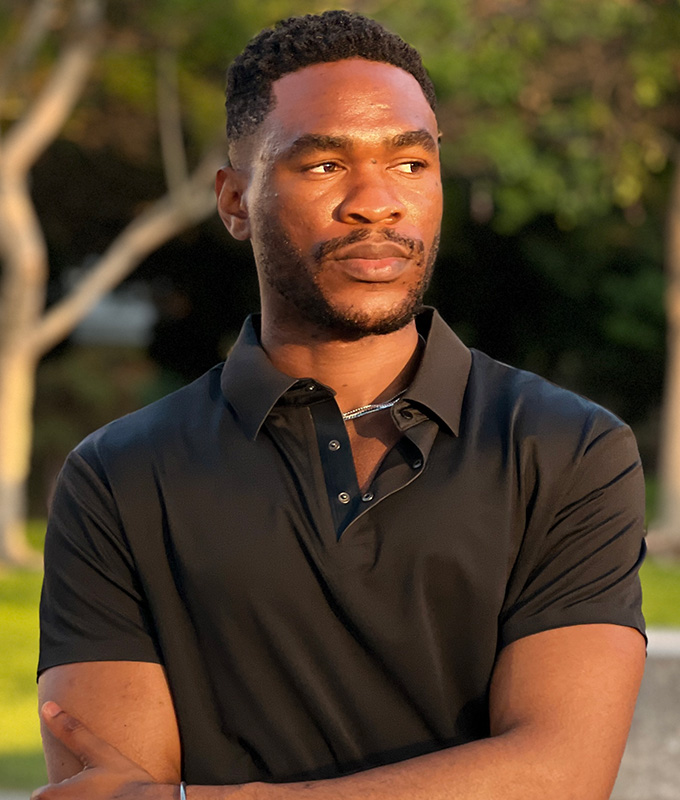
Victor Ultra Omni (They/Them) is a PhD Candidate in the department of Women’s, Gender, and Sexuality Studies (WGSS) at Emory University. Their dissertation The Love Ball: A History of New York City’s House-Structured Ballroom Culture, 1972-1992 provides a historical treatment of the origins of ballroom culture. They use methods of oral history, participatory action research, and broader memory work to engage the pioneers of New York City’s house-structured ballroom culture. Victor’s dissertation research includes excavating archives of Black and Latine queer and trans elders, gathering oral histories, and even throwing a ball to celebrate the 45th anniversary of their house, the worldwide pioneering house of Ultra Omni.
Currently, Victor holds a dissertation fellowship from the Center for Engaged Scholarship and is the pre-doctoral scholar in residence at New York University’s Hemispheric Institute. Their scholarship has previously recieved support from the Mellon Foundation, Society for Visual Anthropology, Social Science Research Council, Institute for Citizens and Scholars, the Ten:Tacles Initiative for Transgender History, and Imagining America. Their writing is published or forthcoming in the Journal of Feminist Australian Studies, Trans Studies Quarterly (TSQ), the African American Intellectual Historical Society, The Black Scholar, and the textbook Feminist Studies: Foundations, Conversations, and Applications among other publications. As a committed public scholar they work as a co-director for the PAGE fellowship and as an advisory board member for Trans Studies at the Commons fellowship focused on gathering Trans Oral History. All of their teaching, writing, and community work emerges from a grounded Black trans studies approach attuned to the politics of memory and guided by an ethic of embodied, intergenerational listening as both method and a guide for our movements.