Futures of Civic Engagement at Arizona State University
Arizona State University (ASU) is a comprehensive research university focused on inclusion and success of the communities it serves. Public scholarship is central across ASU’s design aspirations of principled innovation, intellectual fusion, social transformation, and leveraging place. While ASU rejoined IA in 2025 to support its interdisciplinary communities of creative practitioners and scholars through further connection to IA’s vibrant national network, its community also includes people with ongoing connections to IA. The work of three current and former PAGE fellows and current ASU affiliates are profiled here to showcase just a few of the projects engaging communities to shape the possible futures of science, technology, and sustainability through arts and civic engagement.
Community Engaged Visioning for Technology Futures
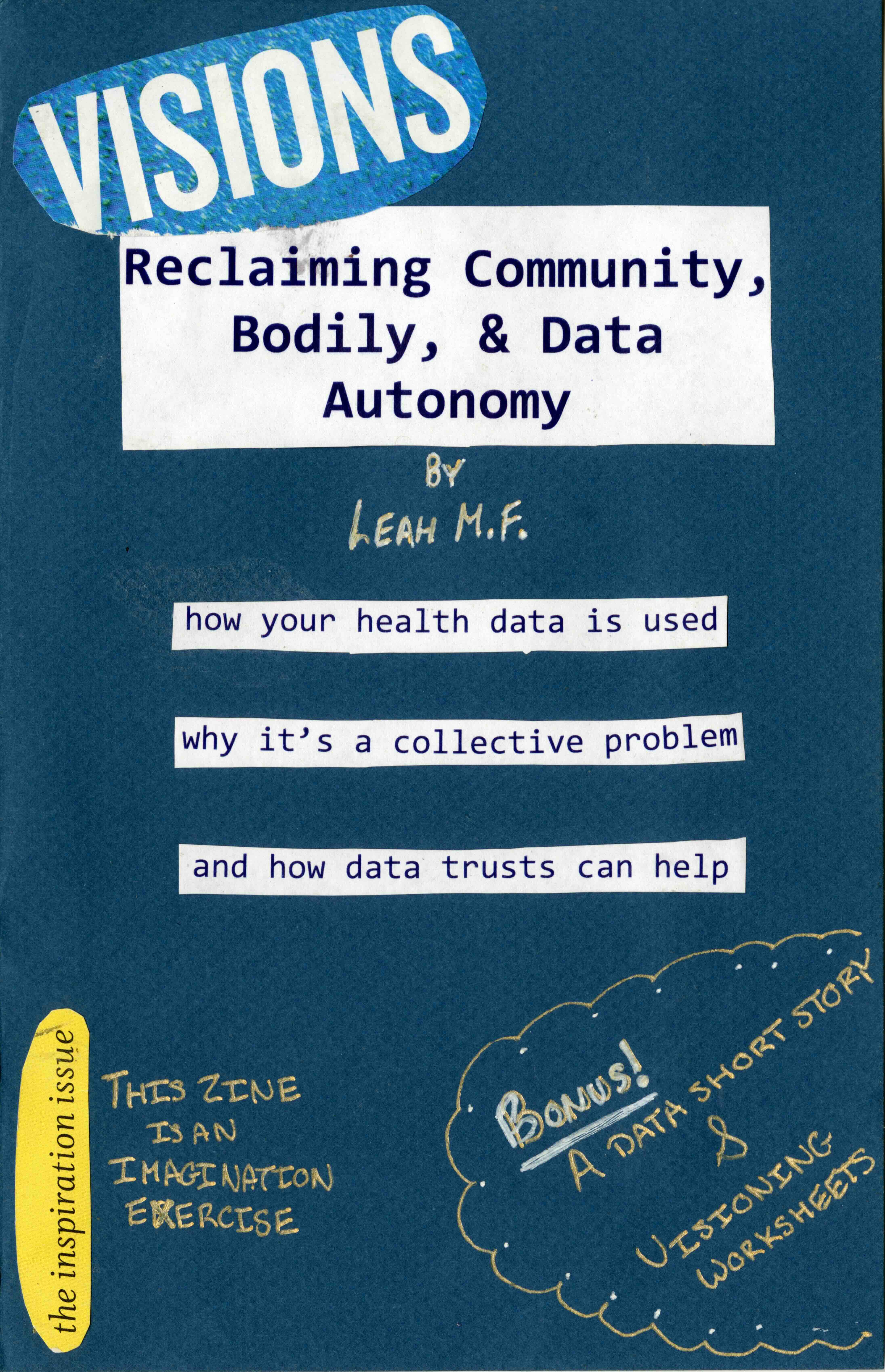
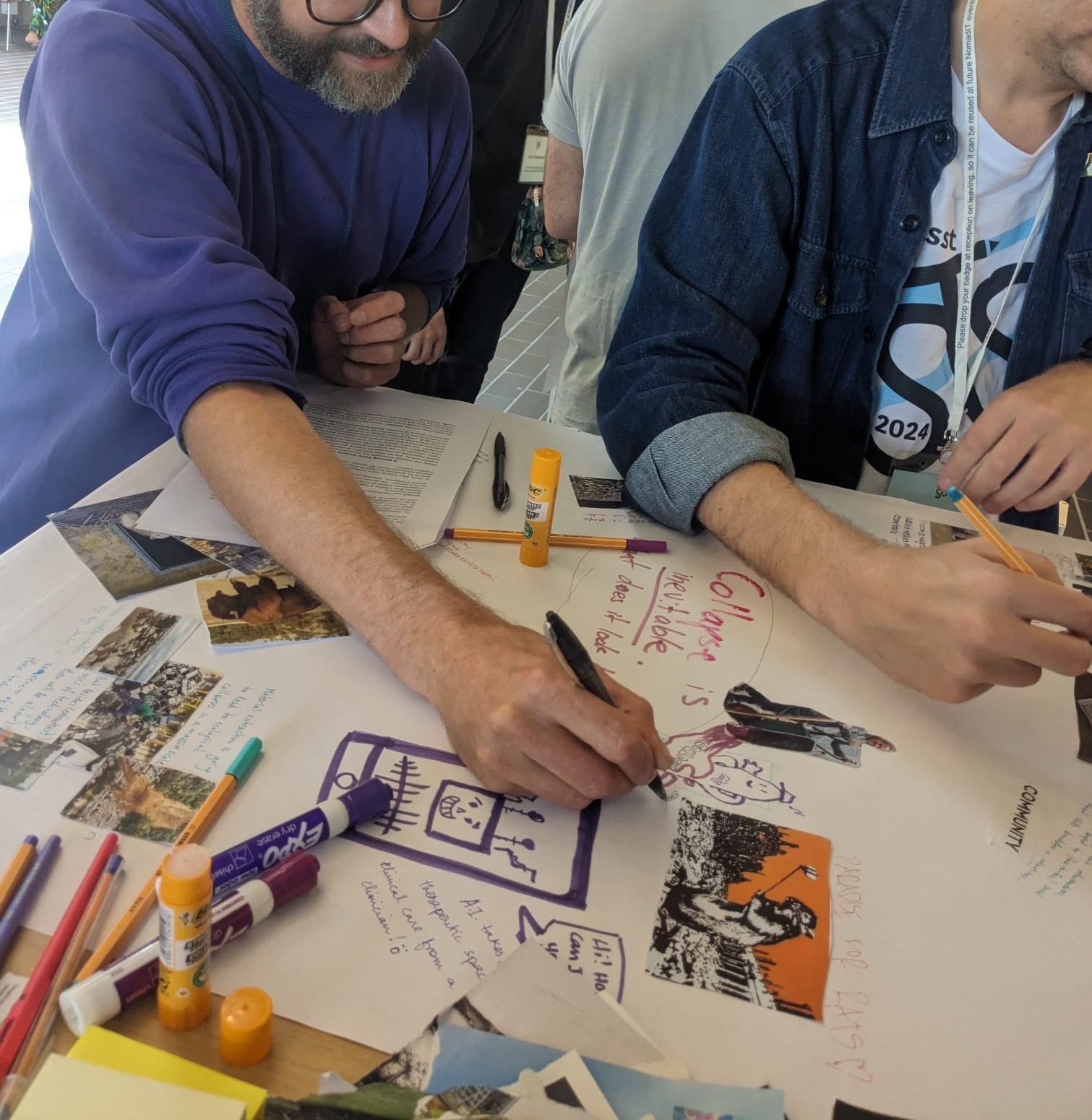
Leah M. Friedman is a 2025-26 PAGE Fellow, and NSF Graduate Research Fellow, and a PhD Candidate in the School for the Future of Innovation and Society at ASU. They are working towards a dissertation project that asks: how can data systems support community and bodily autonomy? Through interviews and community-based workshops, this project envisions the future of community data infrastructures.
This work is conducted in collaboration and consultation with community organizers working on issues of health and technology in the U.S.. It seeks to understand how practices for developing community and bodily autonomy in healthcare translate to building autonomy over data and information through technology design and policy. Leah’s work is publicly engaged through a variety of sub-projects: a Zine to facilitate conversations about data trusts, community workshops that use narrative and arts-based methods for visioning near and far future goals for data autonomy, and volunteering as a researcher with a local tech justice organization.
A Game for Building New Carbon Economy

Jazzmen Lee-Johnson
Artist, Not Never More Print Series featured on the card backs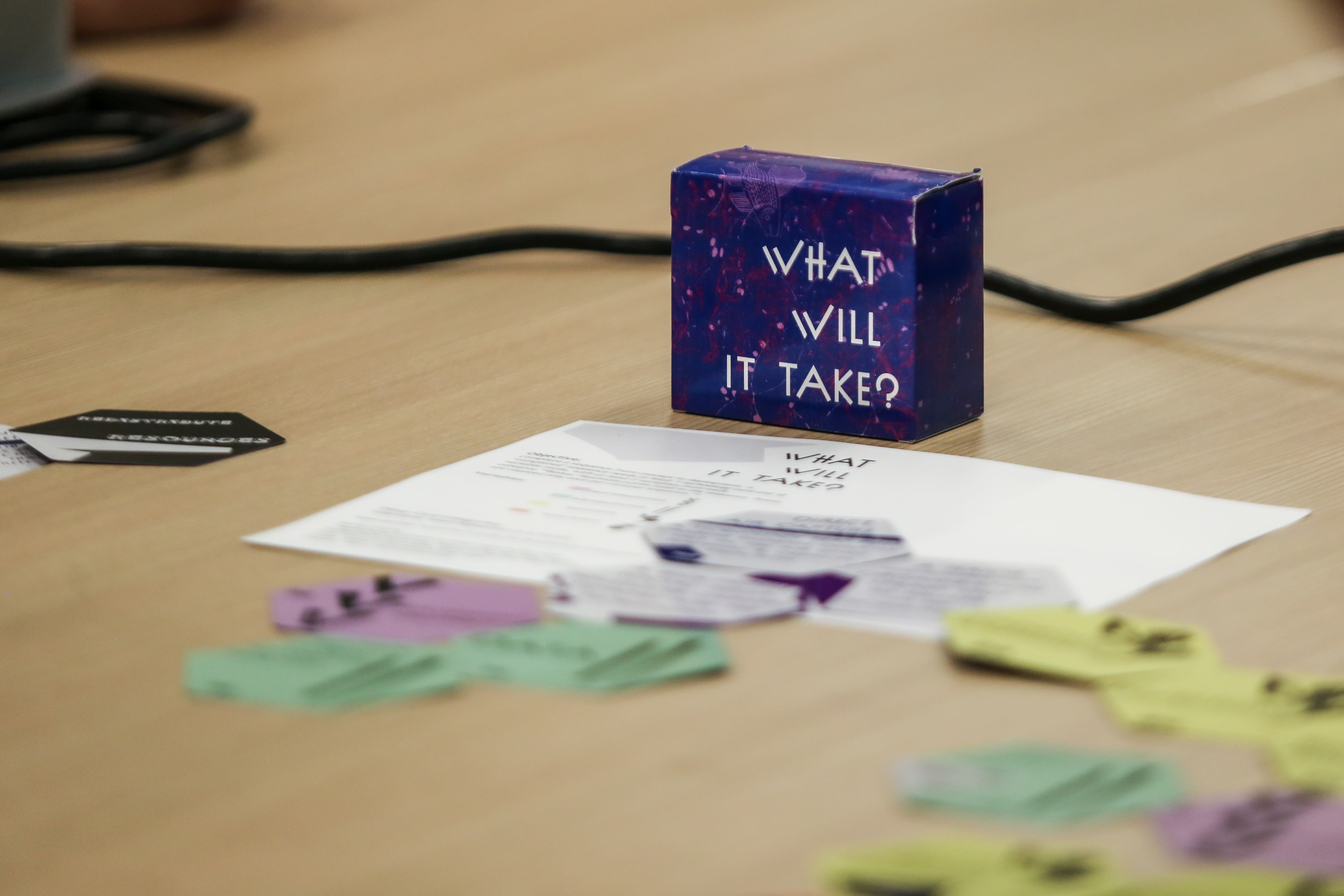
Alexandrina Agloro is a former PAGE Fellow who served as co-Director of the PAGE program from 2013-2015 who currently is Assistant Professor in the School for the Future of Innovation and Society at ASU. She led the creation of a What Will It Take? – a game commissioned for the New Carbon Economy Consortium in June 2025. She collaborated with carbon scientist Dr. Stephanie Arcusa, artist Jazzmen Lee-Johnson, and Australia National University PhD student and playwright Matthew Ngamurarri Heffernan to design a card deck that tasks players with imagining how to take a carbon capture technology from idea inception to product execution. The game involves devious schemes such as “redistributing resources” (i.e. stealing cards from opposing teams), interventions inspired from real-life scenarios, as well as collective possibilities for teams combining forces and pooling their cards to finish their technologies together.
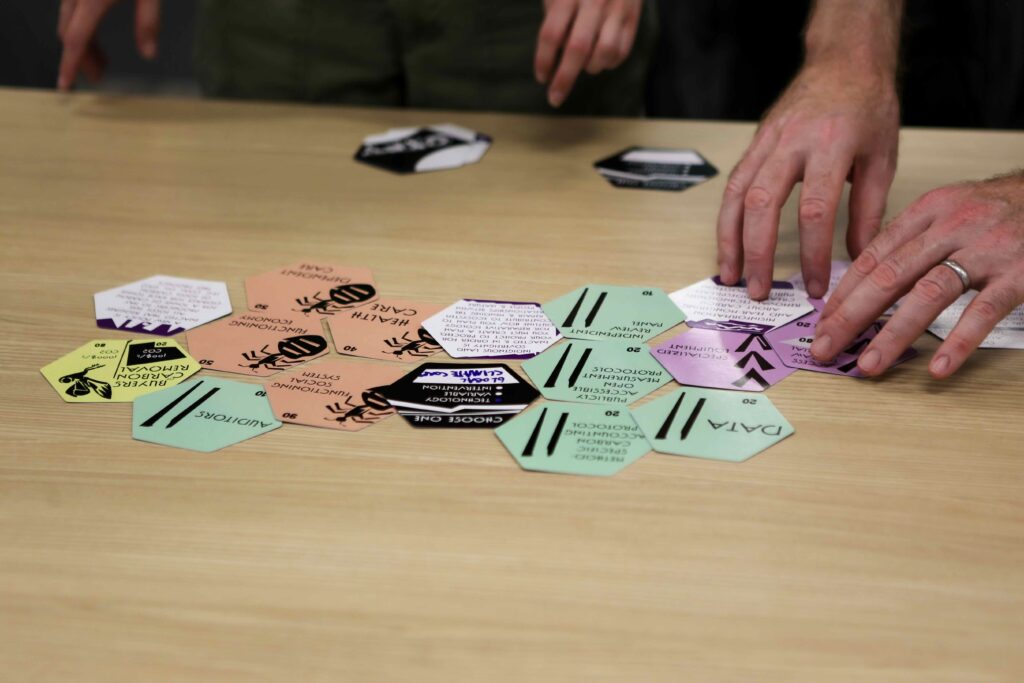
What Will It Take? combines global cultural dynamics, carbon science, and the intrinsic motivations of game play to communicate scientific and economic theories to the public. The game’s aesthetic was inspired by Agloro and Heffernan’s Indigenous (Ilocano/Tagalog and Pintupi/ Luritja, respectively) heritages and the card backs showcase selections from Johnson’s Not Never More print series. What Will It Take? has been shared with players in the United States, Europe, and South Africa and players have remarked that the game has offered an outlet to talk about climate change in an accessible, imaginative way. What Will It Take? was funded by the Alfred P. Sloan Foundation and the card deck, player’s guide, and a carbon futures playlist are available for download online.
A Community Celebration for Trees and Climate Futures
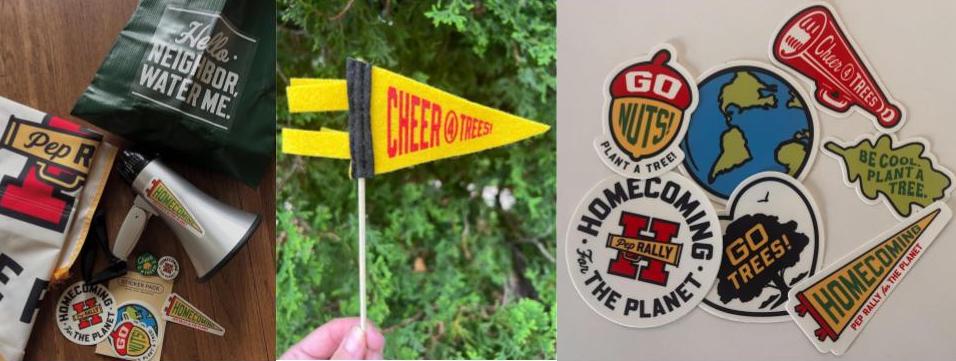
Current Associate Professor in The Design School Johanna K. Taylor was a PAGE Fellow and served as co-director from 2014 through 2016. She is launching Pep Rally for Trees in collaboration with public artist Amanda Lovelee, Design School Associate Professor Paul Coseo, and City of Phoenix Department of Heat Response and Mitigation team Lora Martens and Kayla Killoren. Pep Rally for Trees is an upcoming community celebration of shade, arts, and climate futures in the Maryvale neighborhood of Phoenix. Modeled after a high school homecoming pep rally, the event includes a local high school marching band, pep speeches by community members to recognize favorite local trees, and educational opportunities to learn about tree care and heat resilience.

Amanda Lovelee
Artist, Homecoming: Pep Rally for the Planet*The team has been attending community meetings to engage community members and integrate the celebration into the City of Phoenix’s shade plan which will strategize future shade development in Maryvale and across the city. It is part of Amanda’s Homecoming: Pep Rally for the Planet public art series that navigates climate anxiety through community joy. Scheduled for April, 2026, the event will celebrate tree planting season in Maryvale by transforming tree planting for heat resilience into a shared ritual of play, care and connection. Phoenix Pep Rally for Trees is currently supported with a seed grant from Create the Change, a program of the Global Futures Laboratory dedicated to advancing planetary health.
* From the article: https://saraganim.substack.com/p/when-i-say-tree-you-say-grow
**Banner Image and pictures of the Climate Game were taken by Linsey Wilt, Center for Science and the Imagination.
Funding has been provided by California Humanities and the National Endowment for the Humanities (NEH) as part of the American Rescue Plan Act of 2021.