Celebrating & Reflecting: 25 Years of Community Based Learning and Research at Occidental College
This month’s member spotlight uplifts the Center for Community Based Learning (CCBL) at Occidental College, which will celebrate 25 years of bringing together faculty, students, and community partners as co-thinkers and collaborators in addressing social justice issues. Founded in November of 2001, by a group of faculty and then president, Ted Mitchell, the creation of the CCBL aimed to shift the College’s engagement with the local community from volunteerism to long-term reciprocal community partnerships anchored in the curriculum.
Woven throughout this piece are reflections from a CCBL faculty founder Dr. Regina Freer, and a longtime faculty leader, Dr. Martha Matsuoka. Dr. Freer and Matsuoka’s ongoing presence on the CBLR Faculty Committee demonstrates how faculty leadership has been critical to sustaining the CCBL and CBLR at Oxy.
Education in Action
The CBLR Faculty Committee, a formal faculty committee under the College’s Shared Governance structure, allows faculty to work with CCBL staff to engage in college-wide policies and initiatives while building relationships across departments, supporting collective leadership among faculty members, and fulfilling their campus service requirements. This institutional leadership has been instrumental for increasing faculty capacity to lead initiatives focused on community engagement, e.g. establishing community engaged research in the tenure and promotion guidelines that recognizes the value and rigors of this work; determining teaching credits for community-based learning courses; and the establishment of a new on-campus hub for partnerships throughout Los Angeles. The CCBL staff assists faculty in developing and maintaining relationships with community partners and provides the support necessary to teach community engaged courses and implement community based research, including mentoring students through the Education in Action program. Through workshops on pedagogy, faculty-community partner meetings, and the establishment of best practices, the CCBL has purposefully put principles of reciprocity and mutual benefit into practice in work on and off campus.
QINGXI YANG
Sophomore Student in Media, Arts, and CultureFrom the article: https://www.oxy.edu/about-oxy/stories/qingxi-yang
Our collective work has resulted in over 50 faculty offering close to 100 CBLR courses across academic disciplines annually, dedicated institutional research support for community-engaged social justice work, and a strategic plan that centers community engagement through deep partnerships. To highlight the range and depth of the CCBL’s work, we asked three faculty members, 1 long-term faculty collaborator and 2 first year tenure-track faculty who taught CBLR courses last academic year, to share their experiences with community based learning and/or research at Oxy.
Health and Reproductive Justice in Los Angeles with Dr. Sharla Fett
Dr. Sharla Fett is Robert Glass Cleland Professor in American History in Oxy’s History department. She works in the fields of nineteenth-century Atlantic World slavery, the antebellum U.S. South, and race, gender and health. Professor Fett is a long-term collaborator of the CCBL and is dedicated to creating and maintaining long-term reciprocal partnerships with health and reproductive justice organizations throughout Los Angeles. When asked to describe her collaboration with the CCBL and a CBLR project that exemplifies her practice, Dr. Fett offered the following:
Collaborating with Occidental College’s Center for Community Based Learning (CCBL) for more than fifteen years has introduced me to new pedagogies and made my work as a scholar-teacher more meaningful. The CCBL introduced me to the philosophy and practice of reciprocal, social justice-based community partnerships. Director Celestina Castillo and Assistant Director Kelsey Sablan Martin cultivate faculty participation through a developmental model that encourages us to deepen our practice over time. In my Women and Community Health Class, for example, I started simply with guest speakers from community groups, such as Vision y Compromiso, a network of promotoras and community health workers. In later classes, with the CCBL’s help and the assistance of many committed Education in Action student facilitators, we moved on to more complex projects that got students out of the classroom and helped us all reflect on dynamics of power and resources in campus-community relationships.
One of the most meaningful class projects involved assisting our community partners Black Women for Wellness (BWW) and California Latinas for Reproductive Justice (CLRJ) to archive their organizational records in the Southern California Library for use by future researchers and activists. Oxy Special Collections assisted in this partnership by holding the organizations’ documents securely while students organized and recorded the contents before the boxes were moved to the Southern California Library in South Los Angeles. Students in the class then presented highlights from the records to both BWW and CLRJ. At these culminating presentations, organization members added further context to the document collections in the newly created archival holdings. Students were able to play a role in the preservation of precious organizational records, while gaining insight into the work of reproductive justice organizations, learning to think critically about archives, and also acquiring some introductory experience in processing archival collections.
Navigating US Citizenship Exams with Dr. Kai Yui Samuel Chan
Dr. Kai Yui Samuel Chan is an Assistant Professor in the Politics department and teaches classes on political theory, democratic theory, and transnational politics. Dr. Chan connected with the CCBL staff soon after his appointment at Occidental in the Fall of 2025 and quickly began planning how to embed a CBL component into one of his Spring 2026 courses.
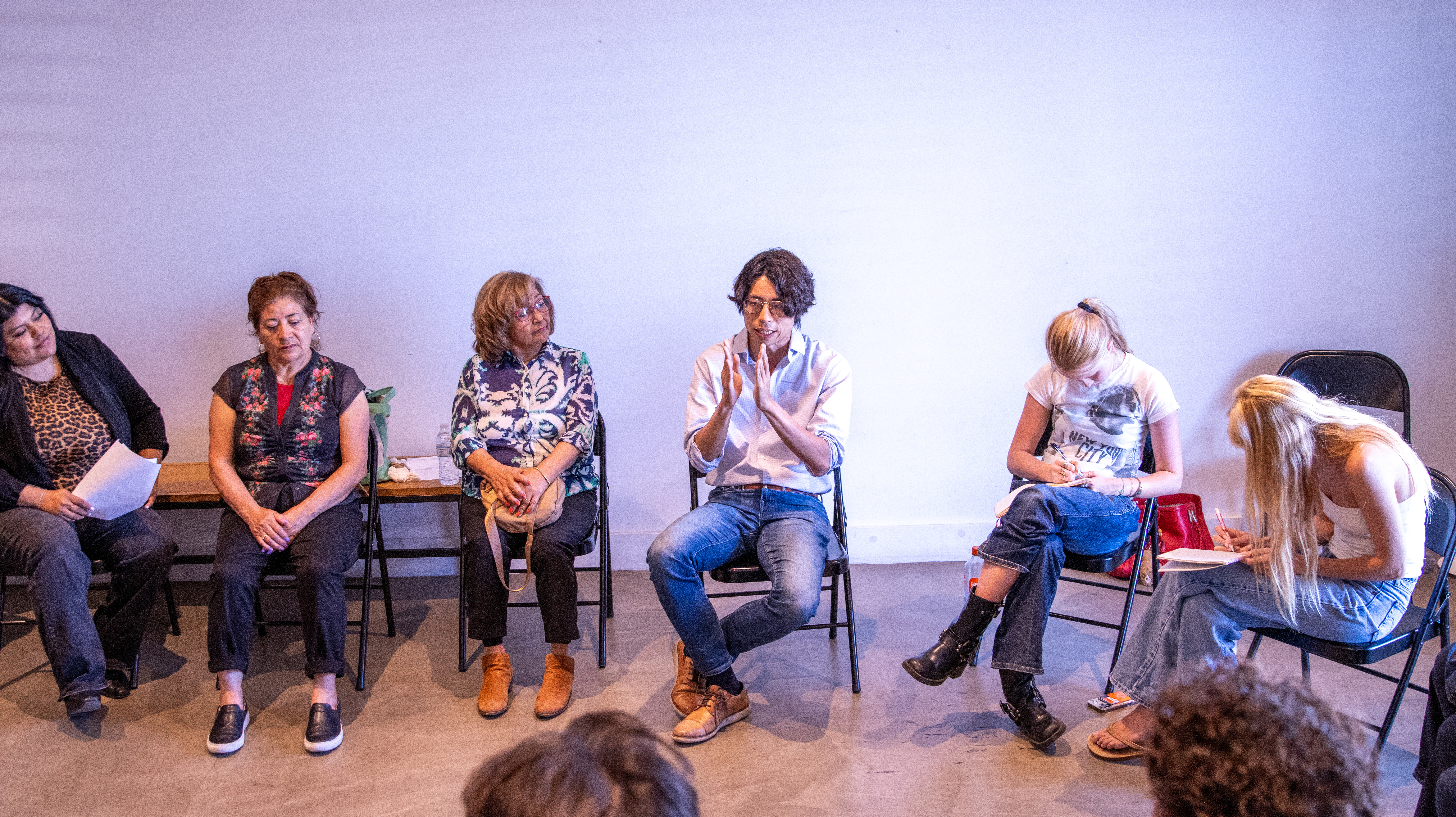
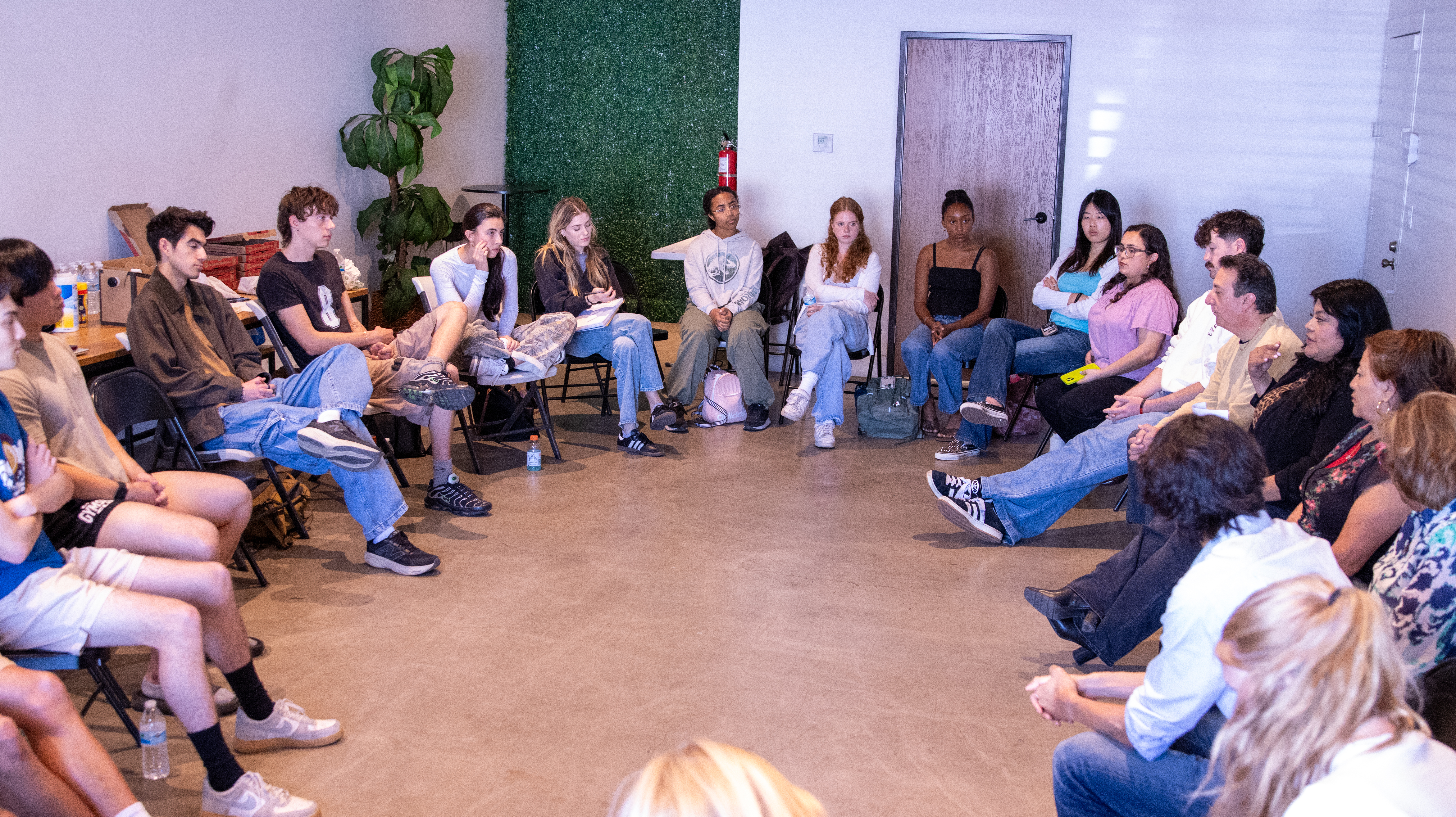
POLS 253: Theorizing Membership and Migration, is a political theory elective that examines the theoretical debates about citizenship regimes and immigration policies. To further students’ understanding of how these regimes are negotiated in practice, Professor Chan collaborated with the CCBL and Immigo, an LA-based non-profit committed to providing immigrants with resources, education, and services. One key service offered by Immigo consists of citizenship classes that help immigrants prepare for and pass their citizenship exams. Professor Chan’s class tasked students to develop videos that would serve as pedagogical tools in these citizenship classes. Students were required to visit Immigo’s citizenship classes in person, get feedback from community members on their video drafts, submit their revised videos, and write a reflection report that draws on both their experiences and a required course reading of their choice.
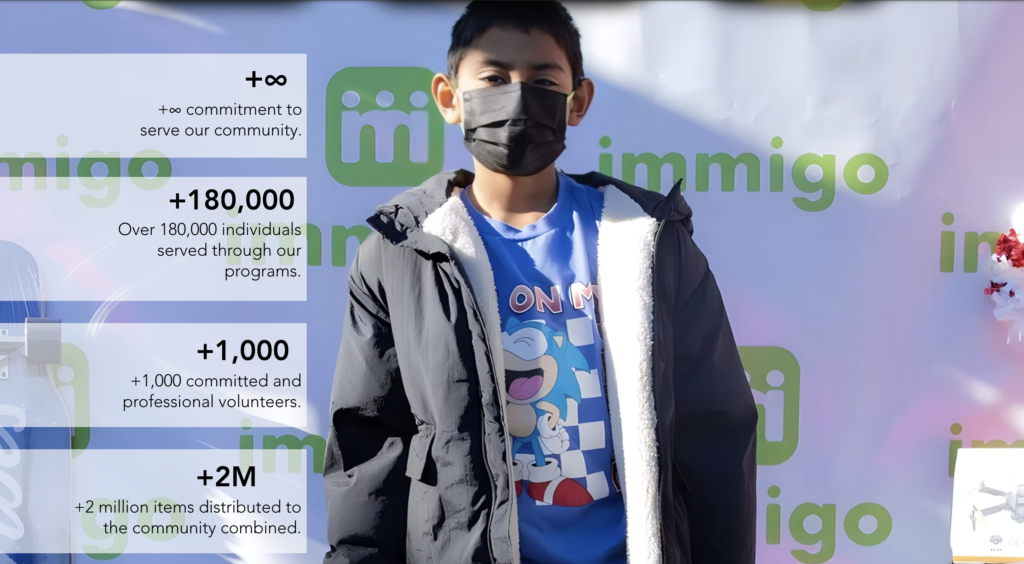
The collaboration turned out to be very successful. Understanding the stakes involved, all the students took the project and community feedback very seriously. Immigo was very satisfied with the videos and put them on their Youtube channel for others to access when preparing for their citizenship test. Many of the students used the reflection report assignment as a way to attend to minute details in their visits and connect them thoughtfully with readings of the course. Students shared that they found it very meaningful to put a human face on the migrants navigating citizenship institutions, get first-hand accounts of the barriers these migrants faced, and experience the communal feelings in these spaces. Both in course evaluation and in verbal communication, students have indicated they would like to maintain this collaboration.
Transformative Justice through Community Building and Land Tending with Dr. Carla Macal
Dr. Carla Macal is an interdisciplinary anti-colonial feminist scholar and Assistant Professor in the Critical Theory and Social Justice (CTSJ) department. Professor Macal is dedicated to community-engaged research addressing the intersections between state violence and intergenerational healing.
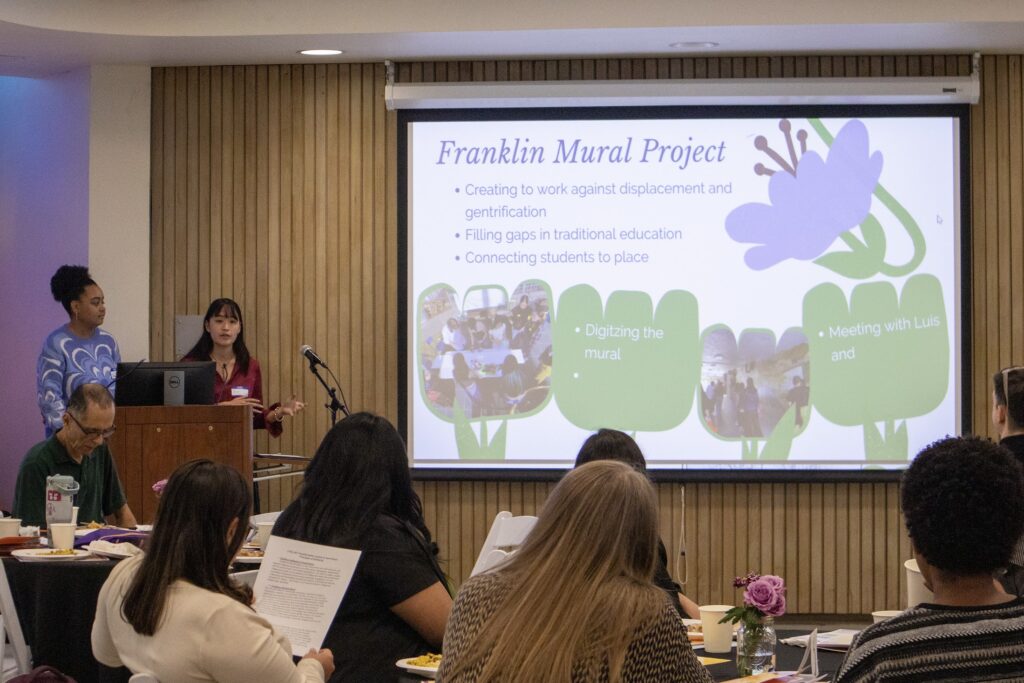
In Spring 2026, students in Professor Macal’s Transformative Justice and Care Praxis course partnered with community-based organizations in Los Angeles, applying theory learned in class to the work of their partner organizations. The students formed three groups, partnering with either: Coyotl+Macehualli, a grassroots BIPOC-led environmental justice group, The Franklin Mural Project, a hybrid (both physical and digital) mural project aimed at cultivating critical perspectives of place in Northeast Los Angeles, or Oxy FEAST Garden, a student-run organic garden located on Oxy’s campus.
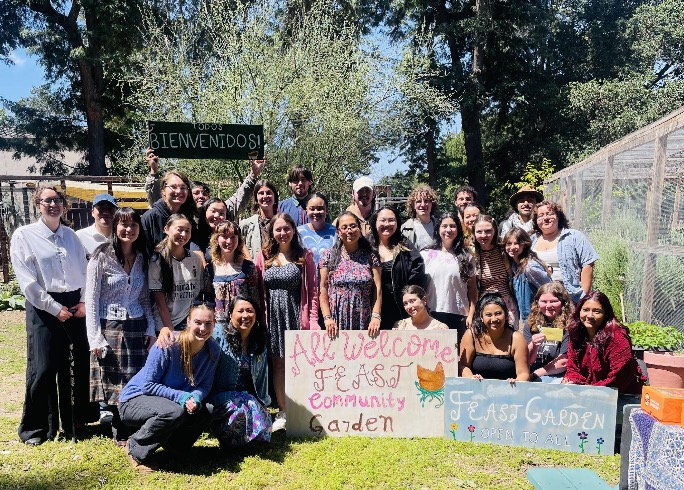
Professor Macal’s students met weekly with their partners and conducted a community needs assessment aligned with each organization’s values, ultimately providing recommendations for future projects at their partner organization. Through this 15-week engagement, students learned about digital humanities, land tending, relational reciprocity, and power mapping. At the end of the course, the students held a gathering with their community partners where they shared their needs assessment and reflections on the work they completed.
Looking Ahead
The stories shared by Professors Fett, Chan, and Macal offer us insight into the world of CBLR at Occidental. The CCBL seeks to support the growth and depth of CBLR at Oxy and commits to continue welcoming faculty and partners at all stages of their careers, disciplinary backgrounds, and experience in CBLR. While we celebrate the many ways CBLR manifests across the college, we simultaneously uplift the hard work and struggle that created Occidental’s particular version of reciprocal, social justice focused community-engaged pedagogy built upon deep partnerships. Through the dedication of countless faculty, partners, students, and staff CBLR has become much more integrated into the fabric of the college – moving from the periphery to a more prominent place. Prospective students and faculty chose Oxy because this pedagogy is embraced, departments include it as preferred and even required aspects of job descriptions, recruiting job candidates with expertise and appreciation for it. All of this required slow, steady, relational work that is very much still in process. As the CCBL reflects on 25 years of CBLR, we want to uplift the faculty, partners, students, and staff who made the work possible. Looking ahead, we are dedicating ourselves to supporting the next generation of community based scholars and practitioners who can steward the CCBL through its next 25 years.
Read more about CCBL in the following article:
Photos Courtesy of Dr. Macal and Immigo.
Funding has been provided by California Humanities and the National Endowment for the Humanities (NEH) as part of the American Rescue Plan Act of 2021.