Material Collaborations at Penn State University
In this month’s member spotlight, we showcase two multi-disciplinary projects at Pennsylvania State University that explore material collaborations with the natural world through land-based projects that center artistic practice. Both projects are connected to the Center for Virtual/Material Studies (CV/MS), a research center headquartered in the Department of Art History at Penn State. Created in 2022, the CV/MS supports innovative research into the materiality of cultural objects, and it explores virtual means of documenting, researching, and communicating that materiality.
Their growing library of pigments, dyestuff, mineral specimens, alloys, wood fragments, hide, tiles, paper, and fibers is available for exploration (in person and on-line) by scholars at all levels. Through workshops and open office hours, CV/MS explore the ways in which material qualities such as aroma, weight, warmth or coolness, fragility, and sound have historically impacted artistic choices and the potency of objects.
PLANTING A FIELD OF FLAX

SARAH RICH
CV/MS Director*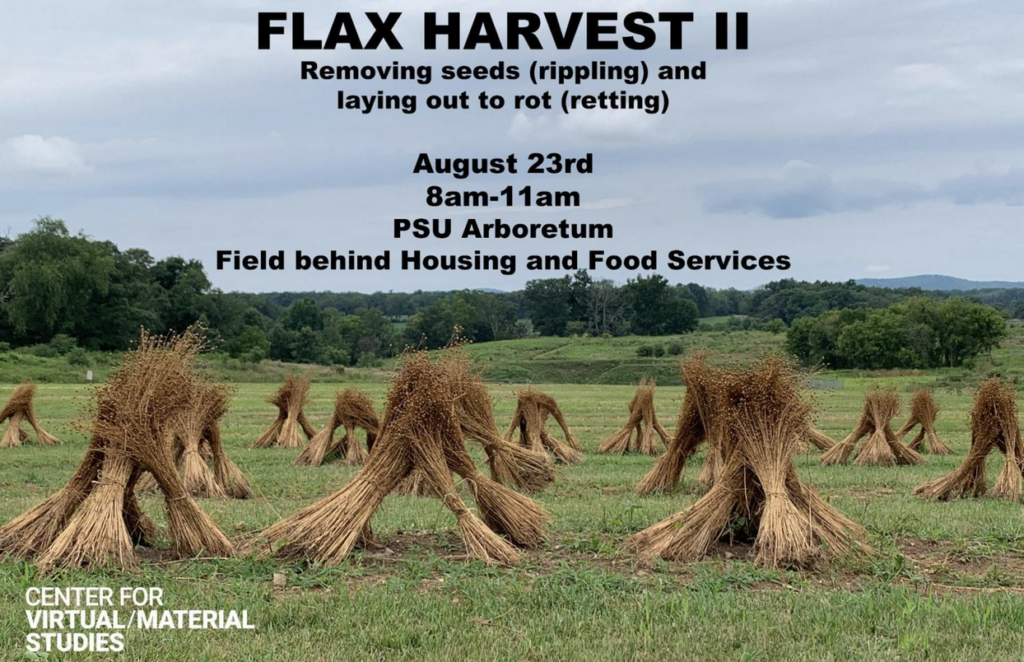
One of the recurring projects at the CV/MS is the planting of a flax field at the university Arboretum. Students, faculty, and staff from multiple departments (College of Agriculture, the Fashion Archive at the School of Theatre, Art History, American Studies, Medieval Studies, the Palmer Museum, and the University Libraries to name a few) join for planting in May and tend the field over the summer. The September harvest is an opportunity for fellowship and work that is assisted by students enrolled in the interdisciplinary course Art and Agriculture. Over the rest of the semester, the group joins and learns the slow process of turning flax into materials essential in the history of cultural objects: linseed oil for oil paint, flax fiber and hemp for cordage, linen thread for clothing and canvases. This slow process grounds the collaborative coursework which ranges from the global (especially in considering global ecologies and diversity of bast fibers and their working) to the local (recognizing farming as a relationship in which we listen to and learn from the land).
Visit the Digital Exhibition
Learn about the history of, and techniques for growing and spinning, this ancient bast fiber in this digital exhibition organized around the CVMS theme of “Fabrication: Virtual and Material approaches to Global Textiles.”
MAKING PIGMENTS FROM PURPLE CORN
Another recent collaboration at the CV/MS involved the creation of corn-based lake pigments with artist Marissa Alise Baez. Based in the United States, Baez was born in 1997 in Houston, Texas. They are a multidisciplinary artist interested in memory, ephemerality, identity, and the body. They studied Sculpture at Texas Woman’s University and graduated with a BFA in May 2019. Baez graduated with an MFA from Penn State School of Visual Arts in 2021. Baez has exhibited and attended residencies nationally and internationally, including Mexico, Texas, Pennsylvania, Washington, Germany, New York, Massachusetts, and California.
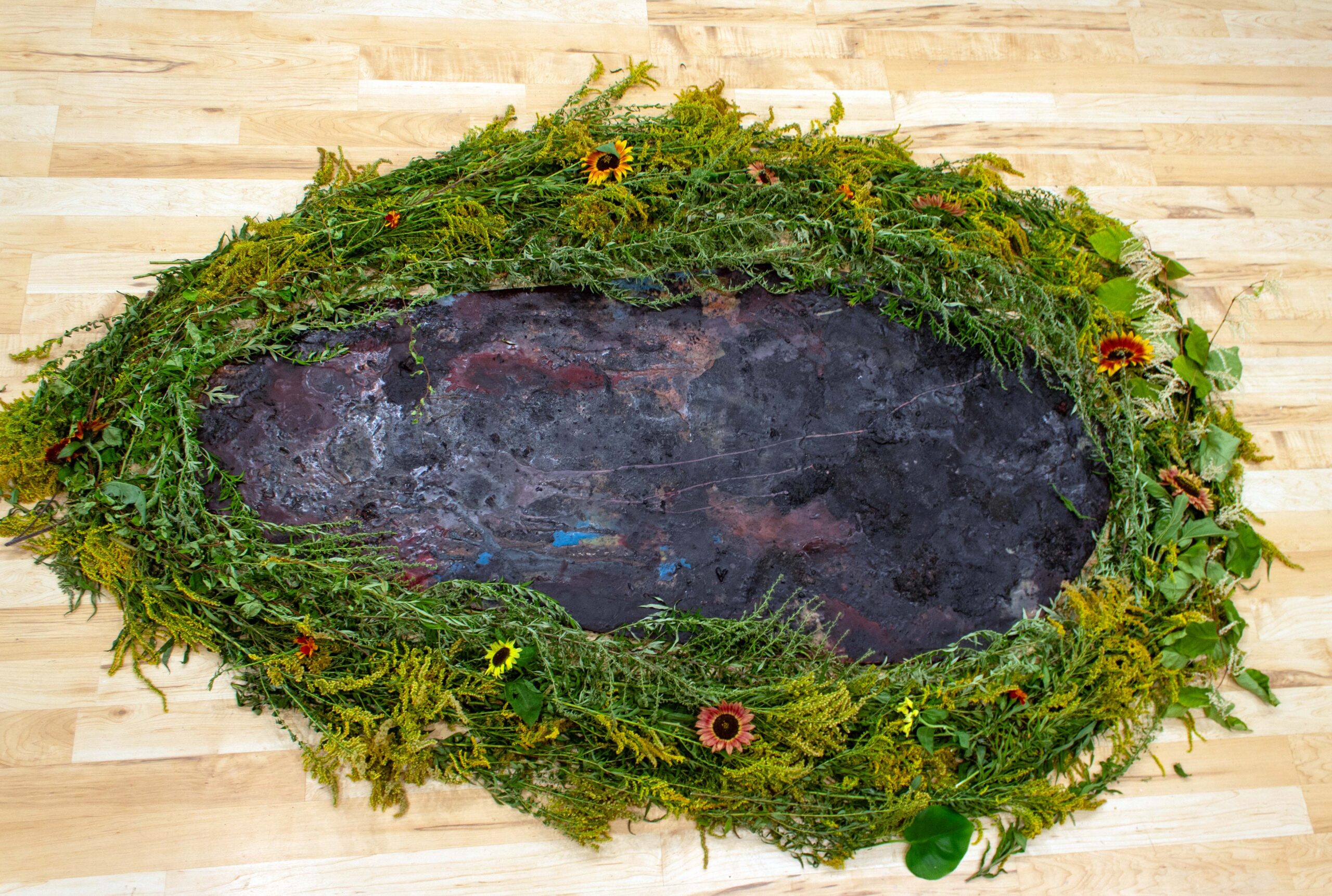
My interest is more focused on the seed patterns, which can be bred to yield different visual patterns. I aim to use the seeds and full cobs for sculpture purposes. Currently, I have created lake pigments from Peruvian purple corn. After creating a dye bath in my own studio, I chose to experiment with lake pigment for its color strength. I have a few other varieties of corn stored away, but due to limited materials, the lake pigments experimentation is limited to purple corn. I am aware that other corn breeds will yield different results. The current batch of purple corn lake pigments is undergoing tests with a screen-printing binder. Once the ink is developed, it will be printed onto handmade mulberry bark paper.
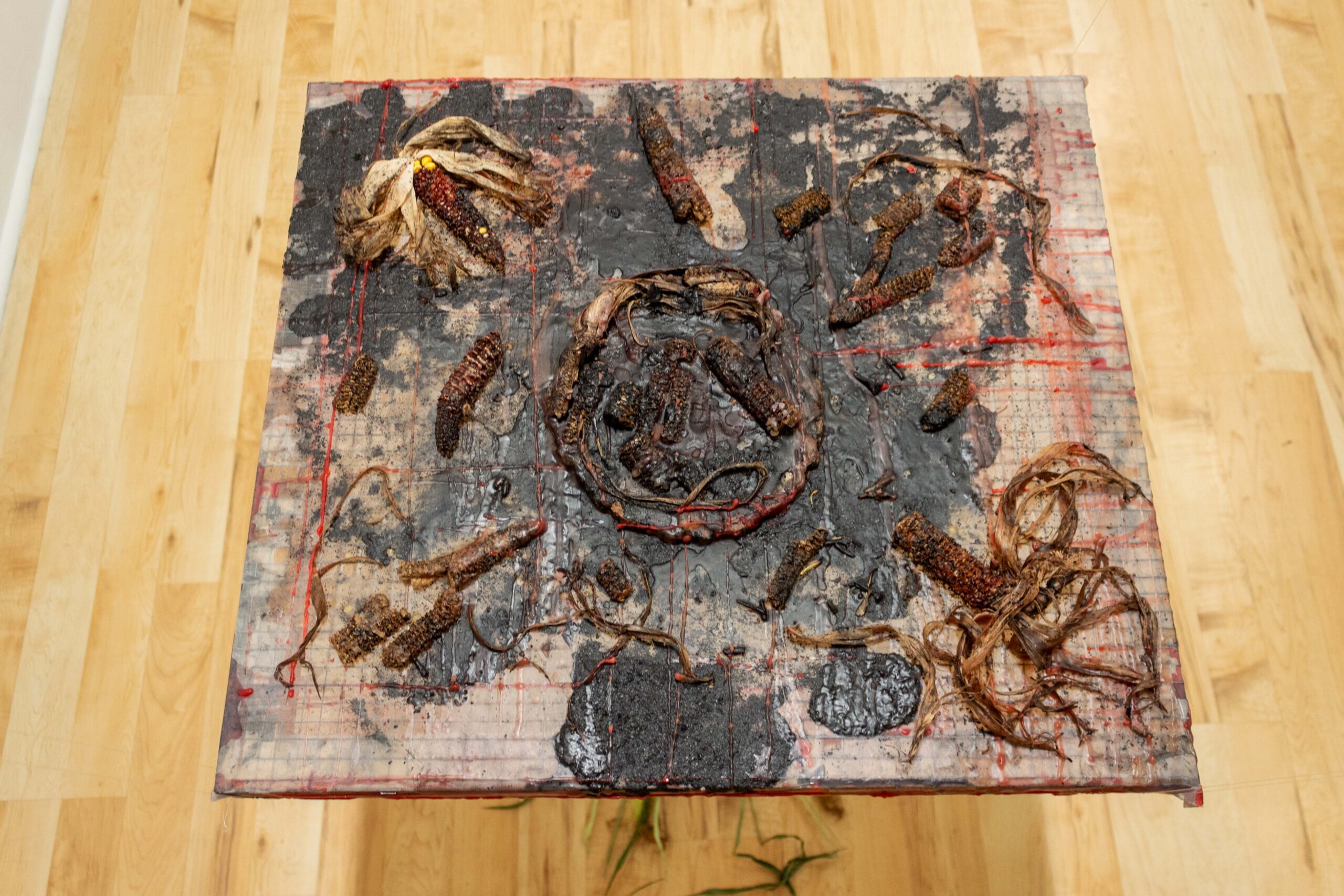
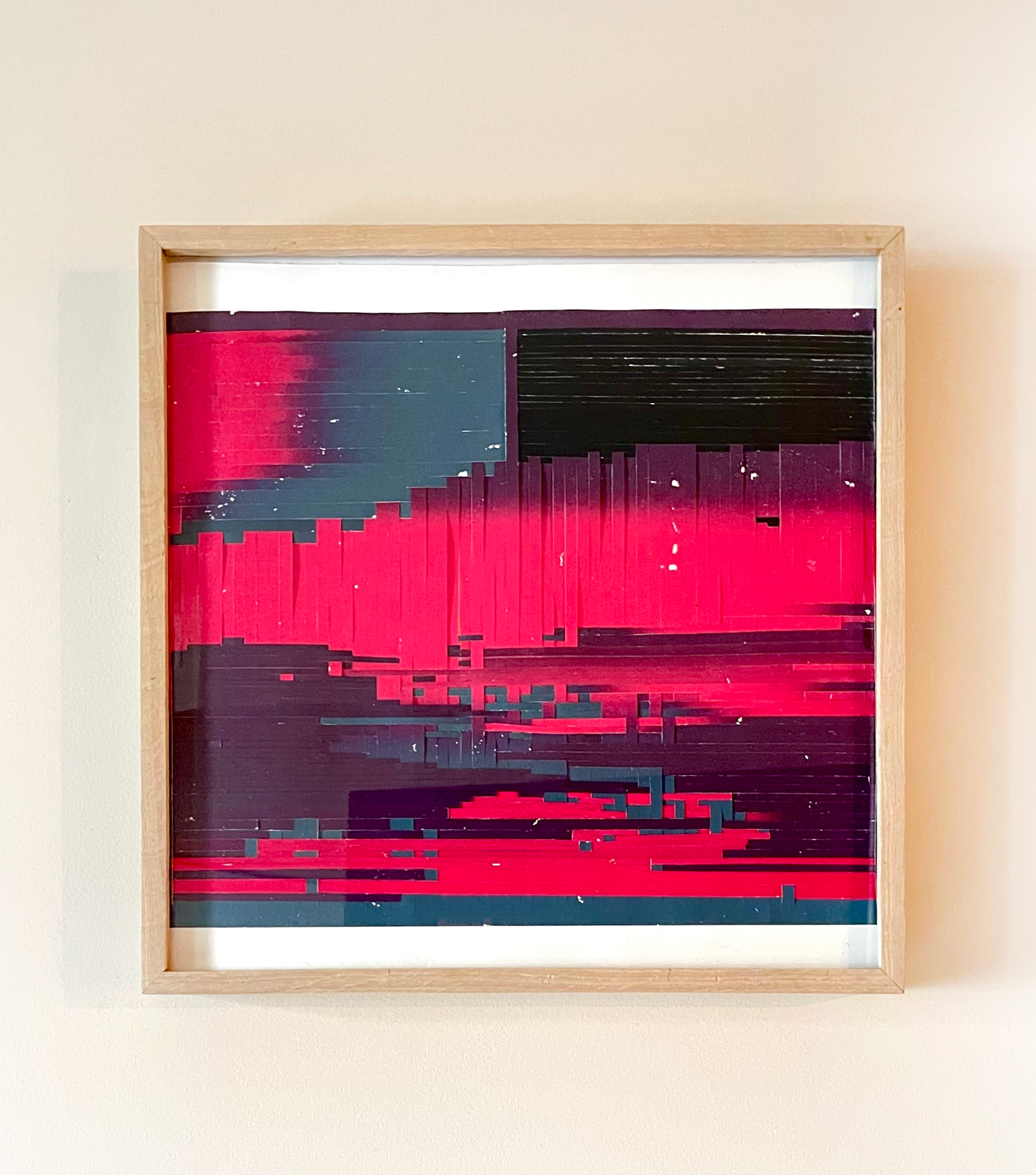
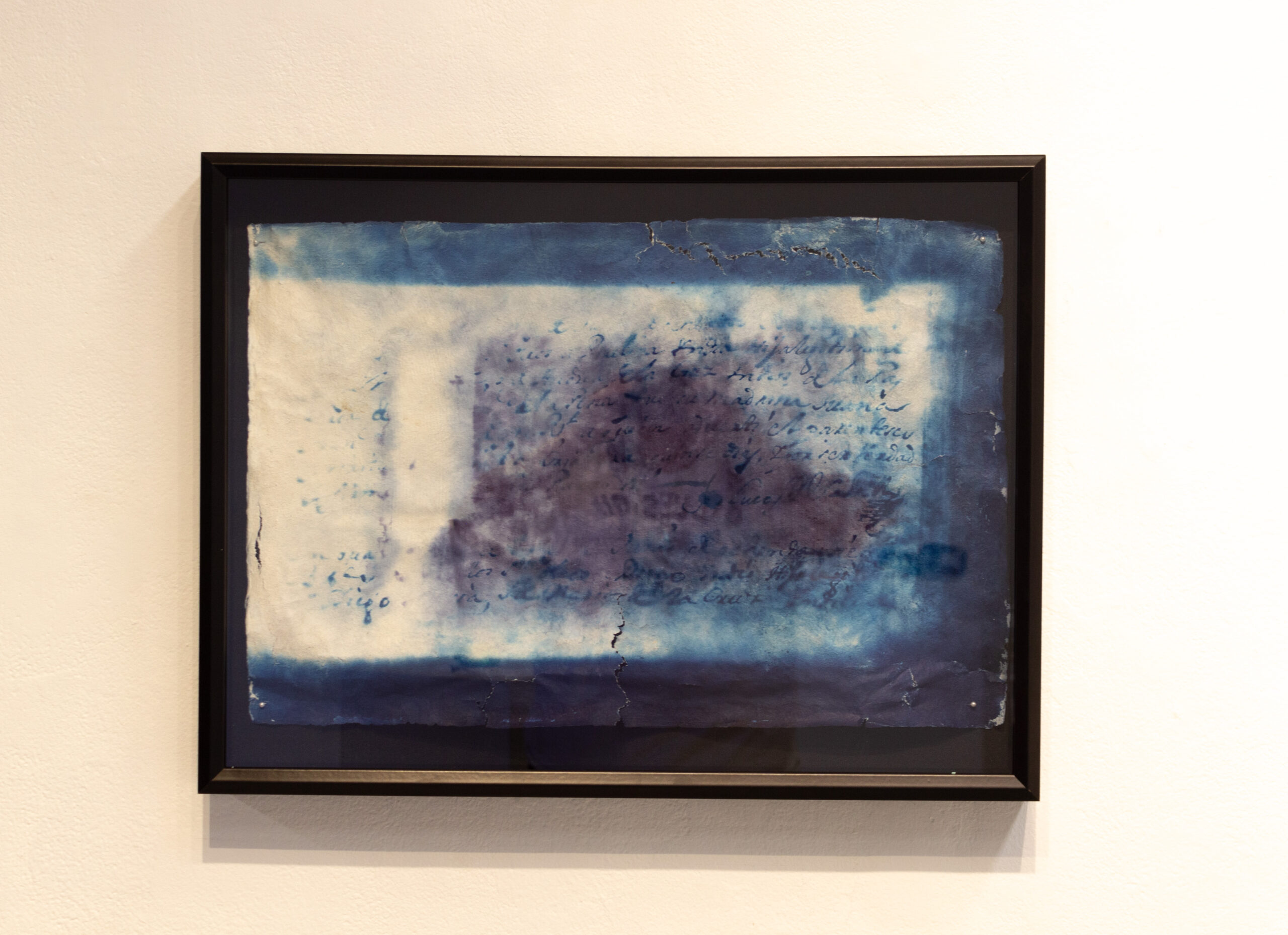
Baez’s work is influenced by suppressed Mexican American history, death, ancestry, and decolonization. Conversations with Latinx and Indigenous academics and artists led Baez to expand their perspective on navigating a state of in-between. They address intergenerational trauma and the resilience of marginalized bodies through a combination of photography, performance, sculpture, and material-based installations. Baez weaves in family experiences and looks to their grandmother’s use of Curanderismo to explore healing and indigeneity.
* Quote from: https://www.psu.edu/news/arts-and-architecture/story/learn-about-flaxs-role-history-art-ag-progress-days
Funding has been provided by California Humanities and the National Endowment for the Humanities (NEH) as part of the American Rescue Plan Act of 2021.