Chasing Stories Across Borders: Notes from a Fangirl
Meng-Hsuan Ho
When Fangirls Finally Got Their Moment (Or Did We?)
“It’s a dream come true to be part of a song that helps girls, boys, and people of all ages get through hardship and learn to accept themselves.”
EJAE
When EJAE accepted her first Golden Globe in 2026 for the song “Golden,” the theme song from K-pop Demon Hunters, she talked about her past onstage. Reflecting on years of rejection and self-doubt, she spoke about what it meant to finally arrive. She was speaking, in part, to us—the fangirls who had always known our attachments were real, our communities meaningful, our labor valuable
But honestly? Part of me still wasn’t sure if the world actually believed that, or if this was just a brief moment of recognition before everything went back to normal.
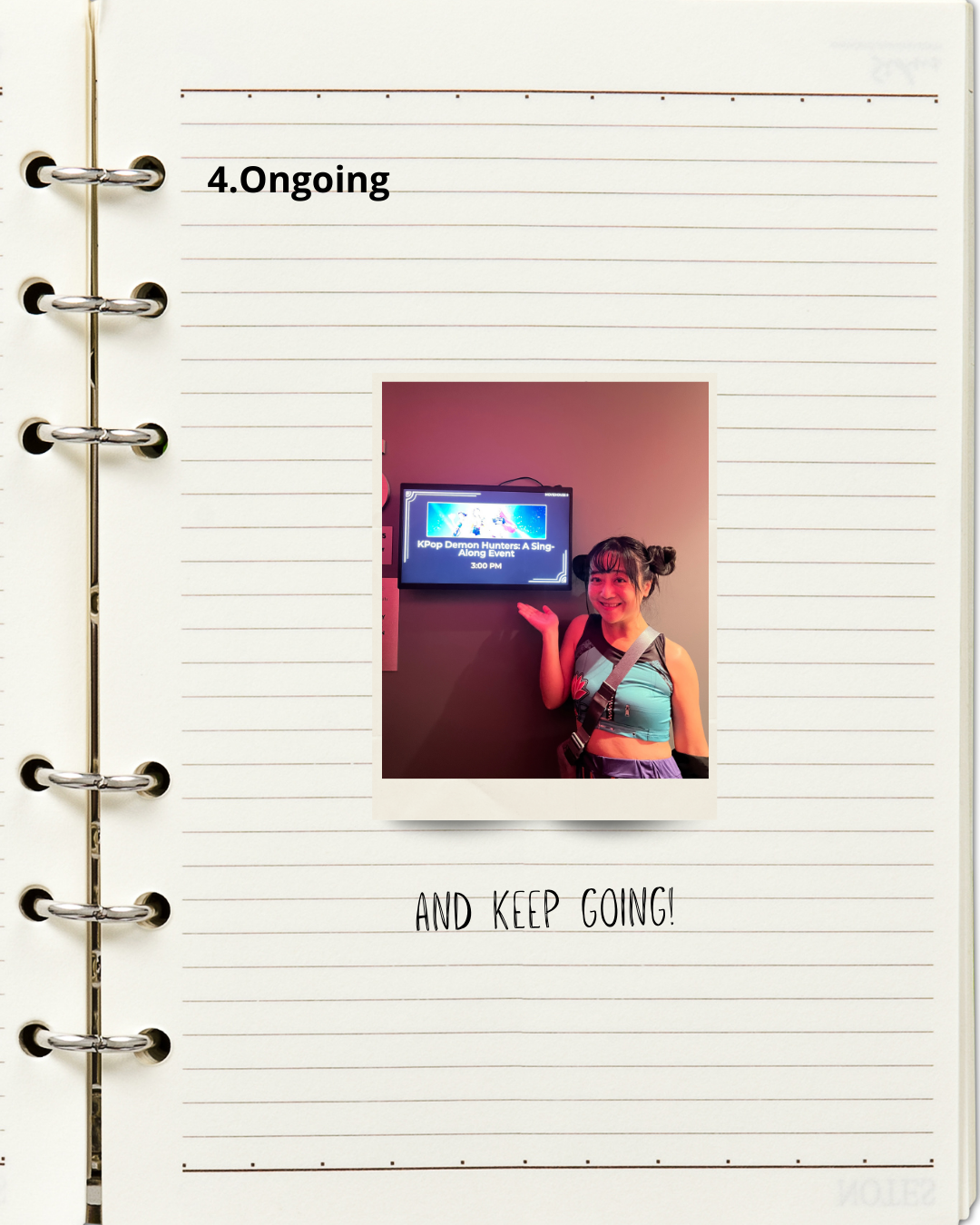
K-pop Demon Hunters became a phenomenon in 2025. Kids dressed up as its characters on Halloween. The soundtrack played at Macy’s Thanksgiving Day Parade. People kept debating whether a Sony-produced animation even counted as “real” K-pop—which in itself is hard to define. What mattered was that it pushed Asian and Asian American artists like EJAE onto bigger stages. It said, out loud, that young people’s emotions matter. That girls’ feelings matter.
But I kept thinking about Turning Red, which came out in 2022. Mei’s whole journey—being a devoted fangirl and becoming her own person, figuring out how those things aren’t excluding but actually shaping each other—that felt more honest to me. More intimate. Her emotional growth wasn’t about rejecting obsession. It was about learning to live with it. About reaching some fragile reconciliation with her mother, and with herself. And it was all tangled up with being the daughter of immigrants, with inheritance and expectation and belonging.
Long before fandom got celebrated on award stages, Turning Red, in my perspective, insisted that these feelings mattered.
Building Communities, One Concert at a Time
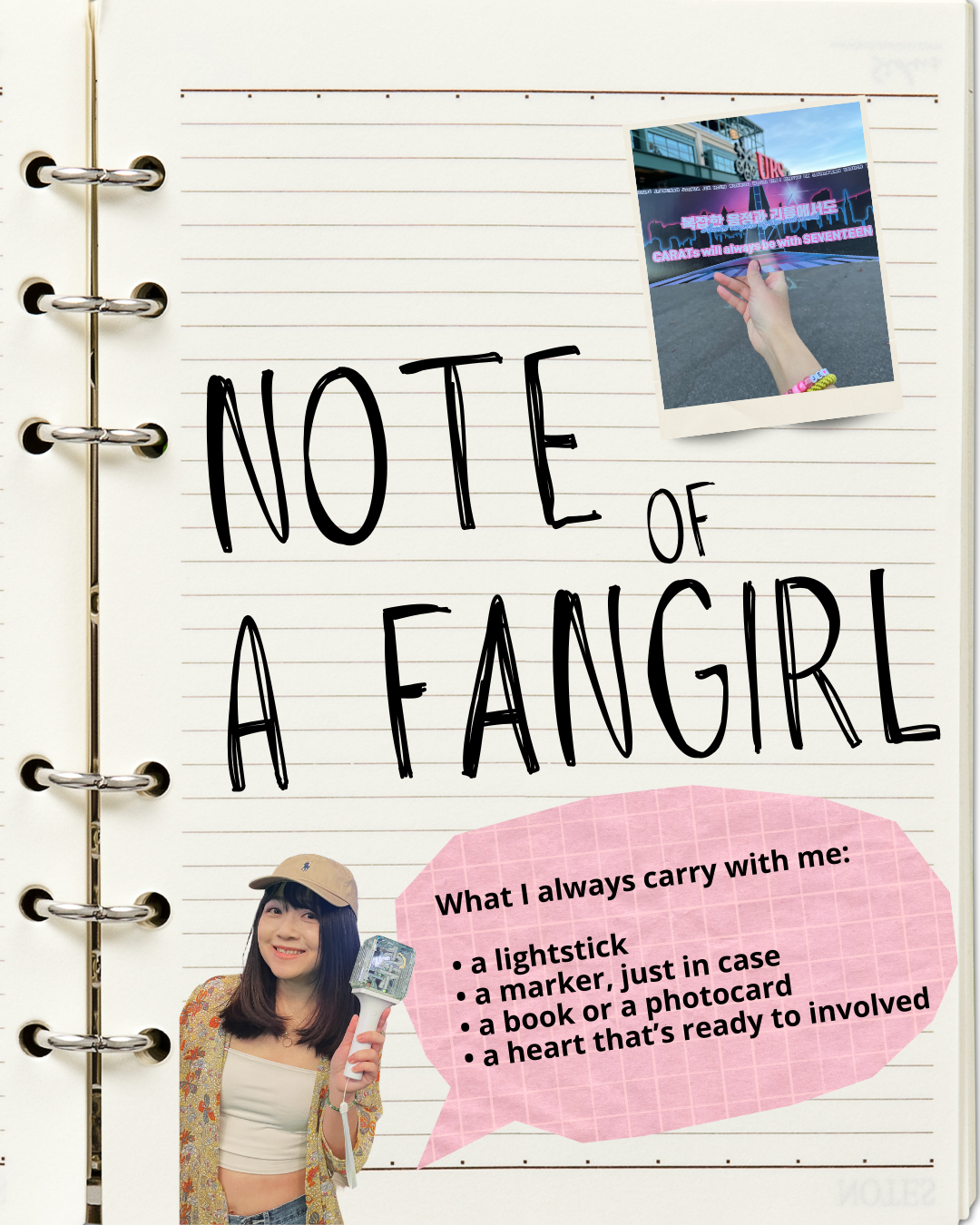
When I moved to the United States from Taiwan, fandom became one of the ways I learned to settle in. On my own terms, or at least that’s what I told myself. Because that’s what fangirls do, right? We’re always building communities—creating symbols, recognizing one another, keeping these shared emotional worlds alive.
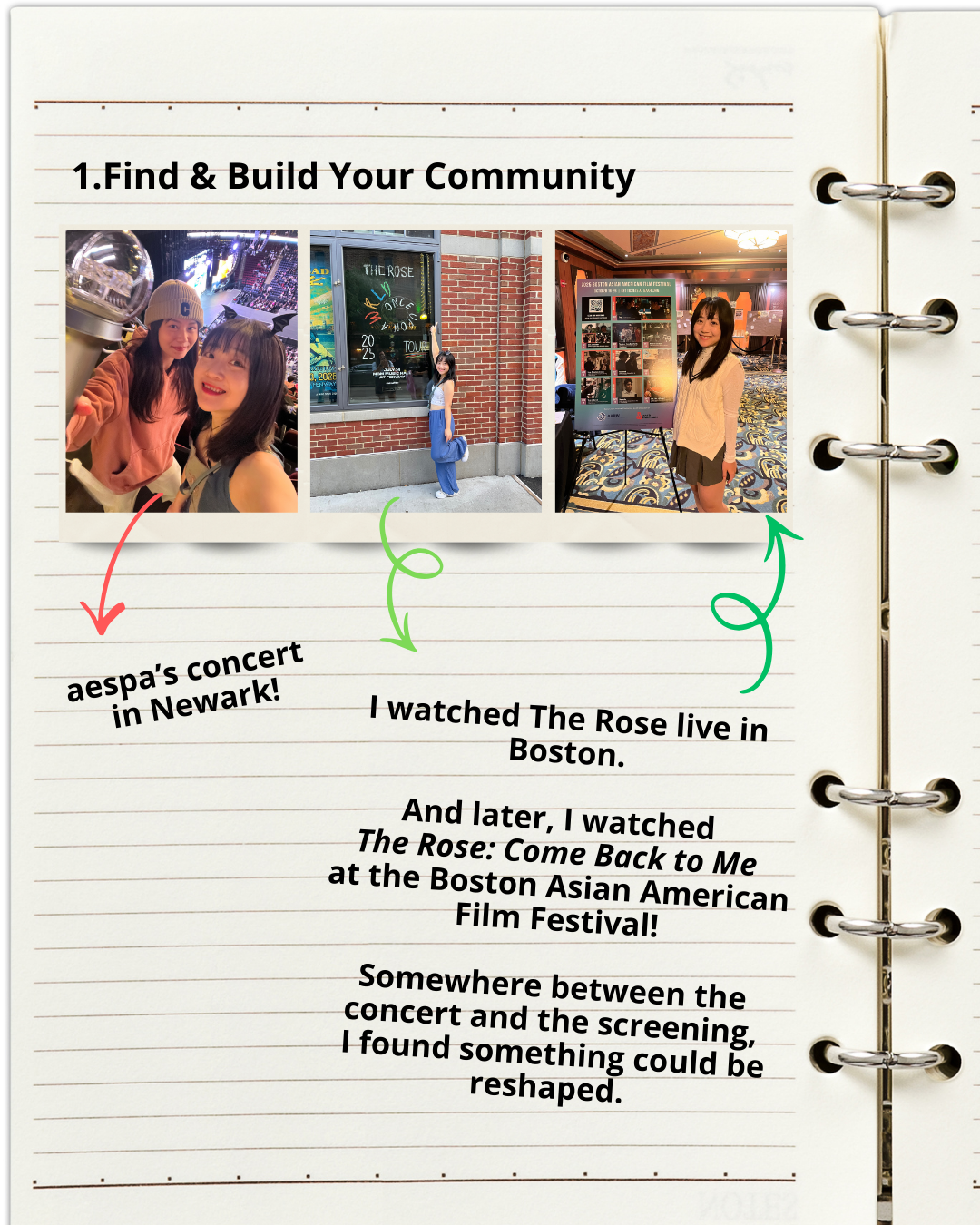
At K-pop concerts in American cities, I found myself watching the fans as much as the idols, if not more. I started treating it like fieldwork (because of course I did! I’m a professional marketing graduate student, we can’t help ourselves). Observing, researching, participating in fan communities as they formed across cultures. The presence of Asian fans shifted depending on which group was performing, how they were marketed. But something stayed consistent: Asian bodies gathering, singing, dancing, taking up space together in American venues, with and within American.
And I wasn’t just watching. I was listening. Comparing. Noticing what moved between languages, what got lost, what transformed.
The Question of Translation
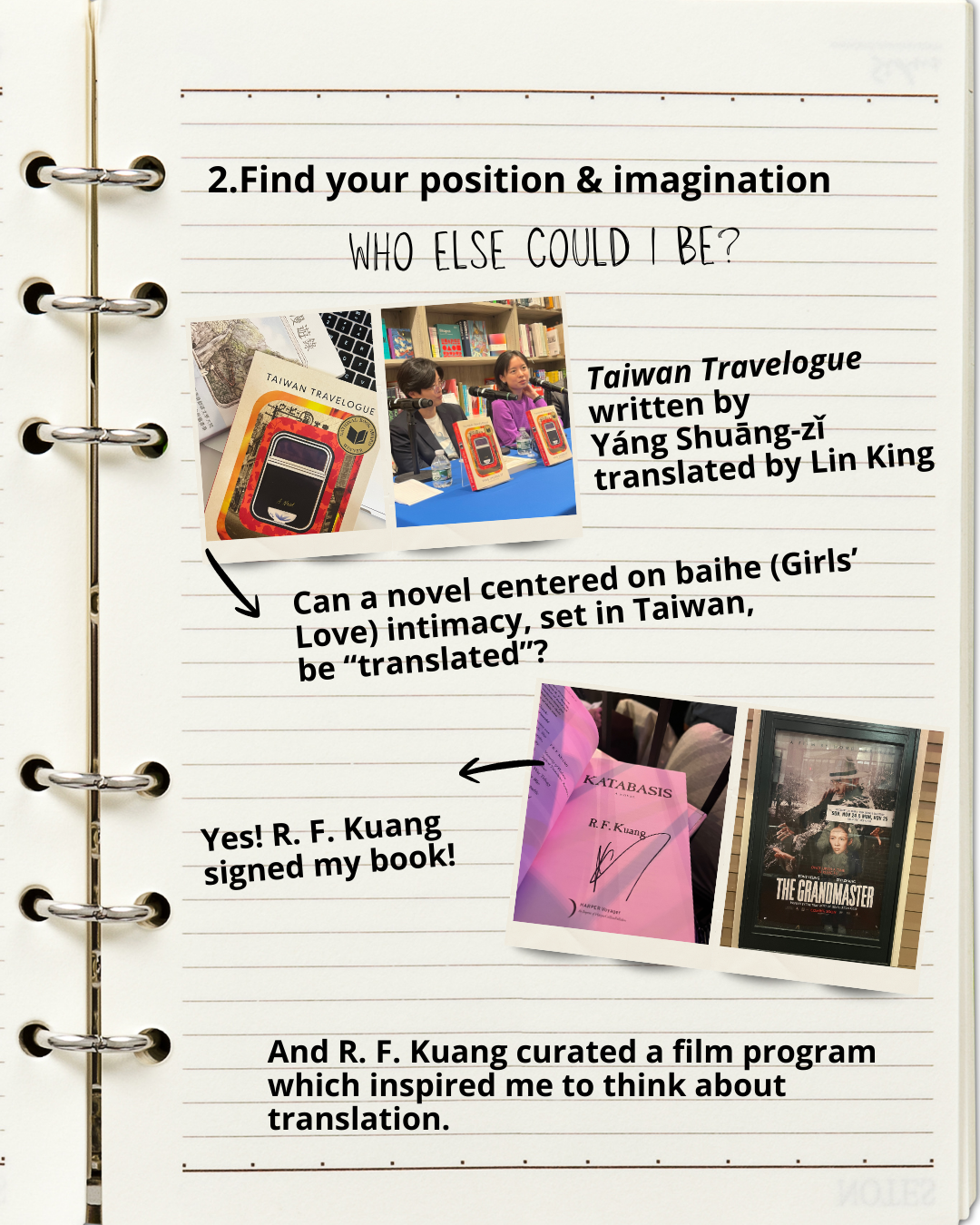
One afternoon in 2024, I went to a screening of Lust, Caution and The Grandmaster at a film program curated by R. F. Kuang in Cambridge. My attention kept splitting—between Mandarin I could follow easily, other dialects I couldn’t fully grasp, and English subtitles I unexpectedly found myself needing. Sometimes I relied on the translation to follow the story. Other times I understood the dialogue directly, even caught what was implied rather than spoken.
I wasn’t just absorbing the film. I was noticing how meaning shifted across languages. The quiet power in how those shifts got negotiated.
And sometimes I wondered if that distance was even translatable at all.
That question stayed with me. Not as some abstract theoretical thing, but as a fangirl who’d learned to follow stories across languages and borders. But underneath it was something heavier, something more personal: would stories from Taiwan matter to people here? Were they worth translating? And even if they were translated—would anyone actually want to read them?
In 2025, Taiwan Travelogue, written by Yáng Shuāng-zǐ and translated by Lin King, received the U.S. National Book Award for Translated Literature.
I remember when I heard the news. I just… wowed. A novel centered on baihe (Girls’ Love) intimacy, set in Japanese-colonial Taiwan—this kind of story, so specific to a time and place I knew intimately, had traveled. It resonated with people who didn’t grow up with that history, that language. It had invited curiosity.
The answer, it seemed, was yes.
The Labor That Makes Stories Travel
But then I started thinking about everything that had to happen for that recognition to be possible. Translation. Editing. Circulation. Care. All this work that doesn’t appear on stage, that doesn’t get Golden Globes, but that allows stories to move across borders.
I’d been noticing this work from a distance. Then, somehow, I found myself doing it.
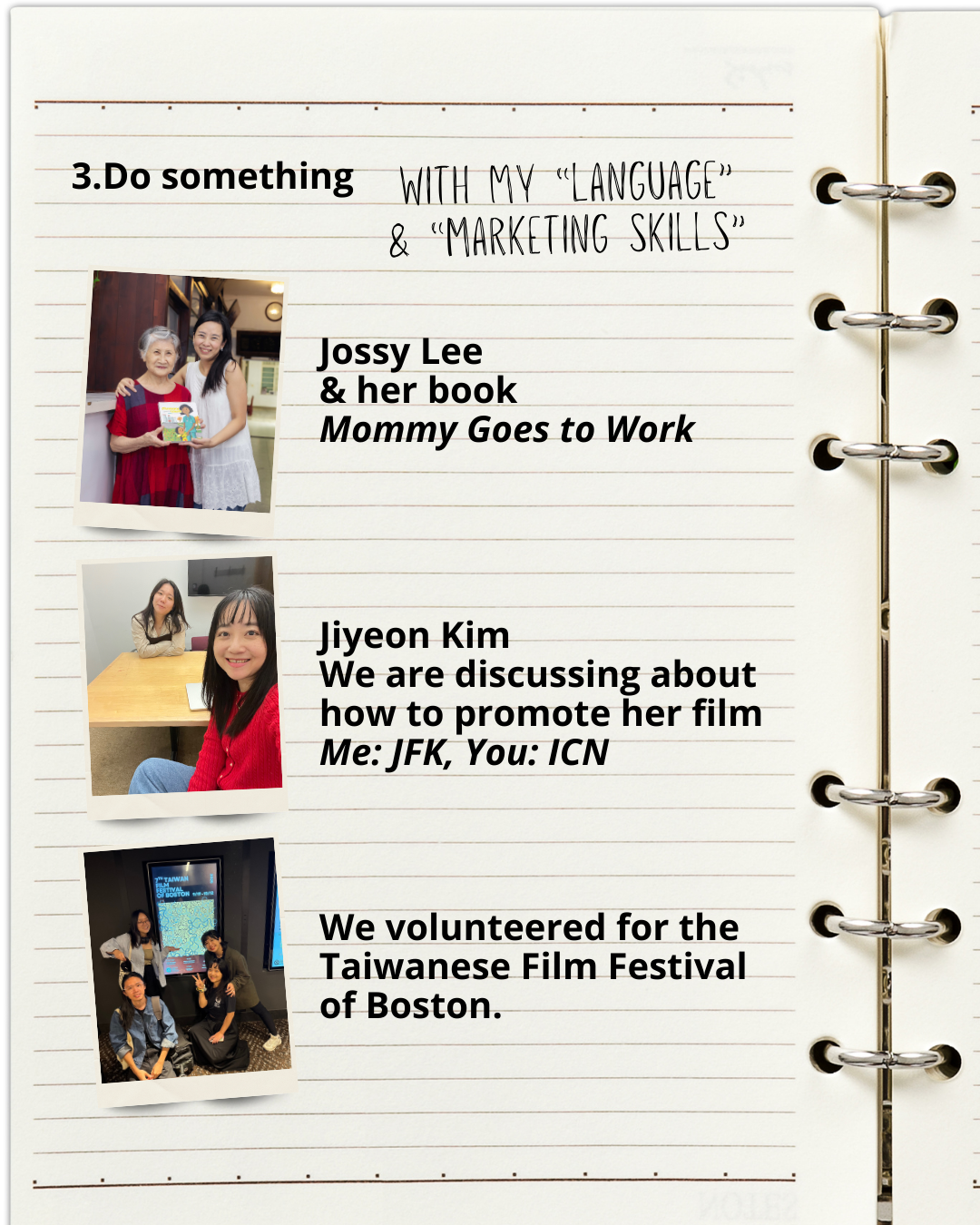
I started working with Jiyeon Kim, an independent filmmaker from Korea finishing her graduate studies in the U.S. Social media, promotion—small, steady work to help a film find its audience. Our collaboration turned into an interview. The interview turned into a space of listening.
Jiyeon’s short film, Me: JFK, You: ICN, follows a flight attendant confronting family trauma and identity questions during a transpacific journey. When I asked why she chose a flight attendant as her protagonist, her answer stayed with me.
Flying is never just movement, she explained. Long-haul flights between East Asia and the U.S. carry a different emotional weight. Time stretches. Bodies wait. Feelings surface.
When Jiyeon moved to the U.S. to study film, her mother insisted on buying her a business-class ticket.
“Because she wanted me to feel as if I were beginning a successful new life,” Jiyeon said, “not escaping from a toxic workplace, or from home.”
That made something click. Migration is rarely a one-dimensional story. Sometimes it’s an escape, and sometimes it’s deliberately opening a new chapter. The long flight becomes suspended space—physical and emotional—where transition is possible. For Jiyeon, the partition of a business-class seat created a private room: somewhere she could cry, read letters from family and friends, and process the weight of leaving.
“It helped me transition mentally into the reality that I was not a tourist; this was a long-term move. I felt like I was washing my spirit before starting a new life.”
The Everyday Acts of Making Ourselves Understood
Listening to Jiyeon, I started seeing how often moments of transition require these quiet forms of care. Not grand gestures. Just spaces where emotion can surface without being interrupted.
But care isn’t always about dramatic transitions. Sometimes it lives in the everyday. In explanations and routines and small acts of making ourselves understood.
Mommy Goes to Work, written and published by Taiwanese author Jossy Lee, started with a simple question her young son kept asking: why does mommy go to work? What began as a private attempt to explain adult life to a child revealed a shared need among working mothers—to have their labor, exhaustion, and love named in language that could be understood.
I got involved by helping the book find its audience, supporting circulation, matching people who resonated with it. Jossy’s book was rooted in her own experience, and she chose to make it public. Mommy Goes to Work now has an office version and a hospital version. The hospital version was created as tribute to her grandmother. Emotion, once articulated, opened a path for others to follow.
What We’ve Been Doing All Along
Fangirl devotion. Transpacific flights. Working mothers.
These might seem like separate stories. But they all involve collective emotions—feelings that are shared but often unspoken, waiting for someone to name them and bring people together around them.
I think about the fangirl who watched concerts, who moved between languages, who built community in new places. She already had the ability to do cultural work.
Maybe we’ve been doing this all along. And now, finally, we found the right language to follow.
Funding has been provided by California Humanities and the National Endowment for the Humanities (NEH) as part of the American Rescue Plan Act of 2021.