Tribuno del Pueblo: The People’s Paper
Ada Marys Lorenzana
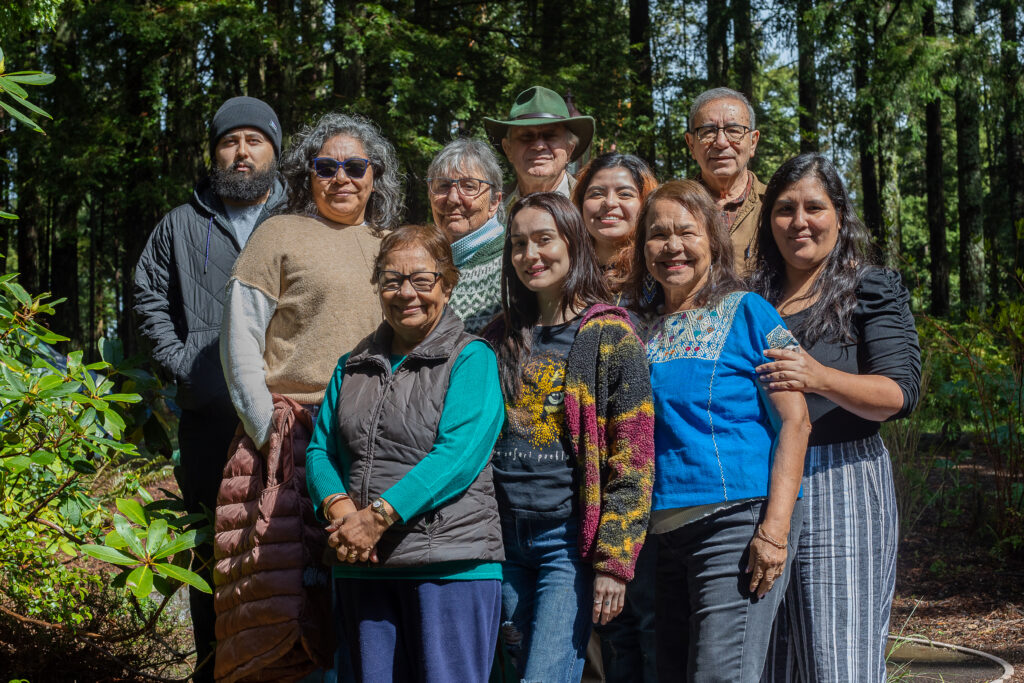
Understanding the need for more Spanish publications, the Tribuno del Pueblo began publishing local stories from farmworkers, laborers, and immigrants in 1973. Voices that were regularly ignored in mainstream media were amplified in the Tribuno. The paper sought to be a tool for working class people in the United States that could be used to amplify their causes and raise awareness about the issues they faced in their communities. Issues raised in the publication included call to actions for protests, raising awareness about international conflicts, and framing Leninist theories into digestible concepts for working class people. Since the beginning, the Tribuno del Pueblo has largely been volunteer based and women-led.
1970s
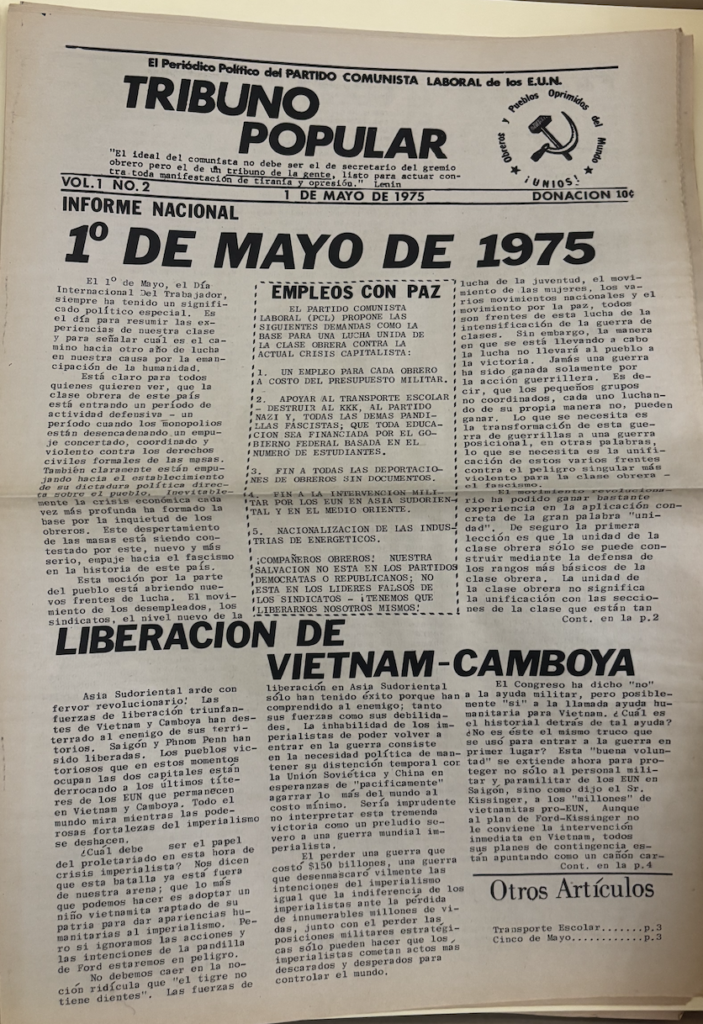
The Tribuno del Pueblo was first established as the Spanish translation of the People’s Tribune but later became its sister publication and developed into its own independent paper focusing on different immigrant centered issues. Both publications stemmed from the Communist Labor Party (CLP) but quickly became their own entities. At its inception, the CLP was composed of members from the League of Revolutionary Black Workers in Detroit, Michigan, Colectivo del Pueblo in Los Angeles, California, and student organizers from M.E.Ch.A. in San Diego, California. The CLP connected young Chicanos, Black Power activists, and Anti War activists across the country and formed a vast network that has withstood the test of time.
Laura Cortez Garcia has been with the Tribuno del Pueblo since the 1970s and was the sole Editor of the paper from 2005 to 2023. Laura is currently a Co-Editor of the publication. Gloria Meneses Sandoval is an Editorial Board Member who has been active with the paper since the late 1970s. Both women were active in the Chicano Movement in California and have dedicated their lives to uplifting voices from the immigrant rights movements.
1980s
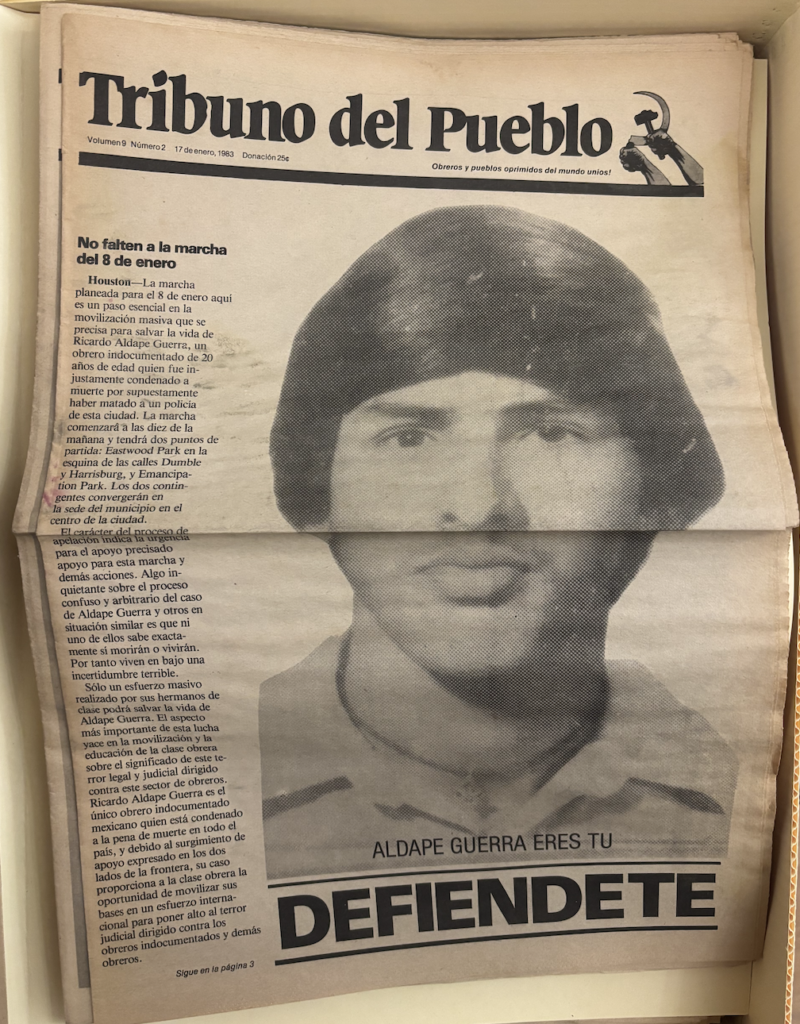
In the early 1980s, the Tribuno del Pueblo was involved in advocating for the release of wrongfully accused Ricardo Aldape Guerra from Houston. Aldape Guerra was sentenced to death for allegedly killing a police officer but a later trial demonstrated that the investigation was tainted by gross official misconduct. The Tribuno joined his family in Texas throughout the trial and published several newspapers to bring attention to his case. The Tribuno would also lead a campaign to advocate for Border Patrol to carry life saving equipment after several immigrant drownings in the San Joaquin Valley. During the 80s, the Tribuno would also undergo a name change from Tribuno Popular to Tribuno del Pueblo.
1990s
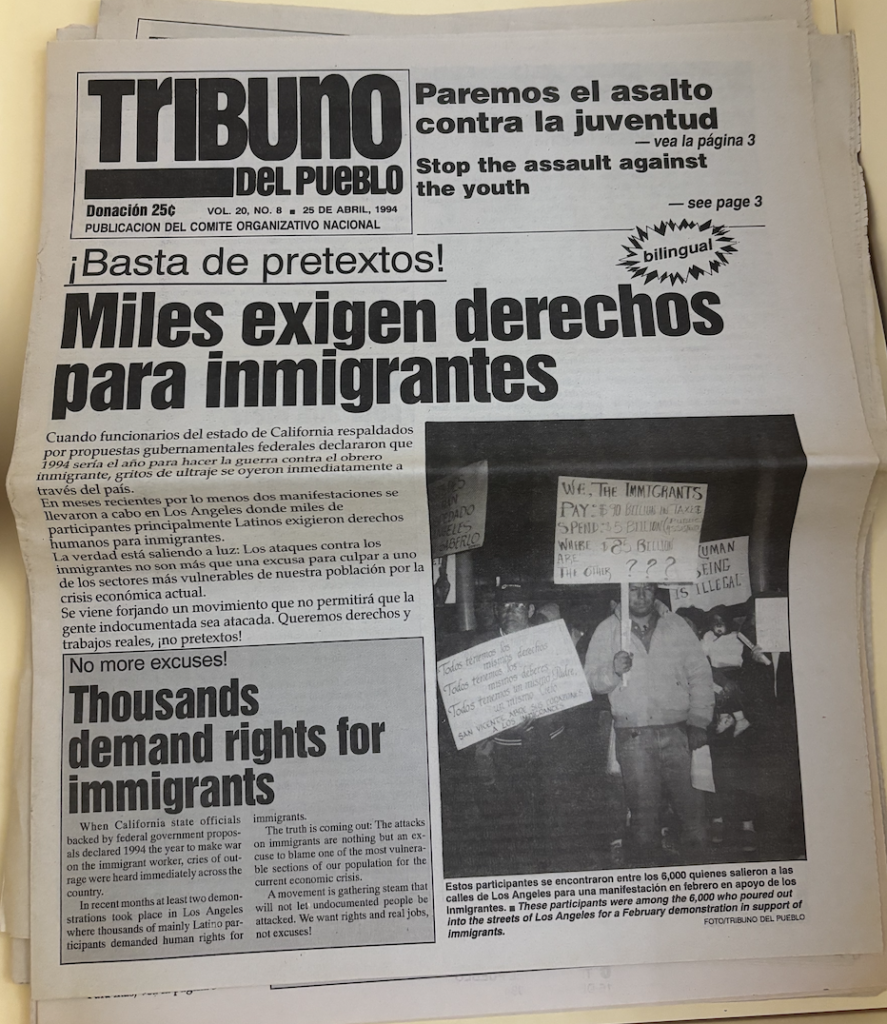
In the 1990s, the Tribuno underwent new leadership under editor Trinidad Rodriguez and transformed from a Spanish paper to a bilingual paper. Language was used as a tool to bring in new audiences but also as a way to recognize the multilingual reality of the Latino community. By publishing in both English and Spanish, the paper could not only bring awareness to community issues but simultaneously aid immigrant communities practice their English. As anti-communism sentiment rose, the paper would omit the communist symbol from its header so as to not scare away audiences.
2000s
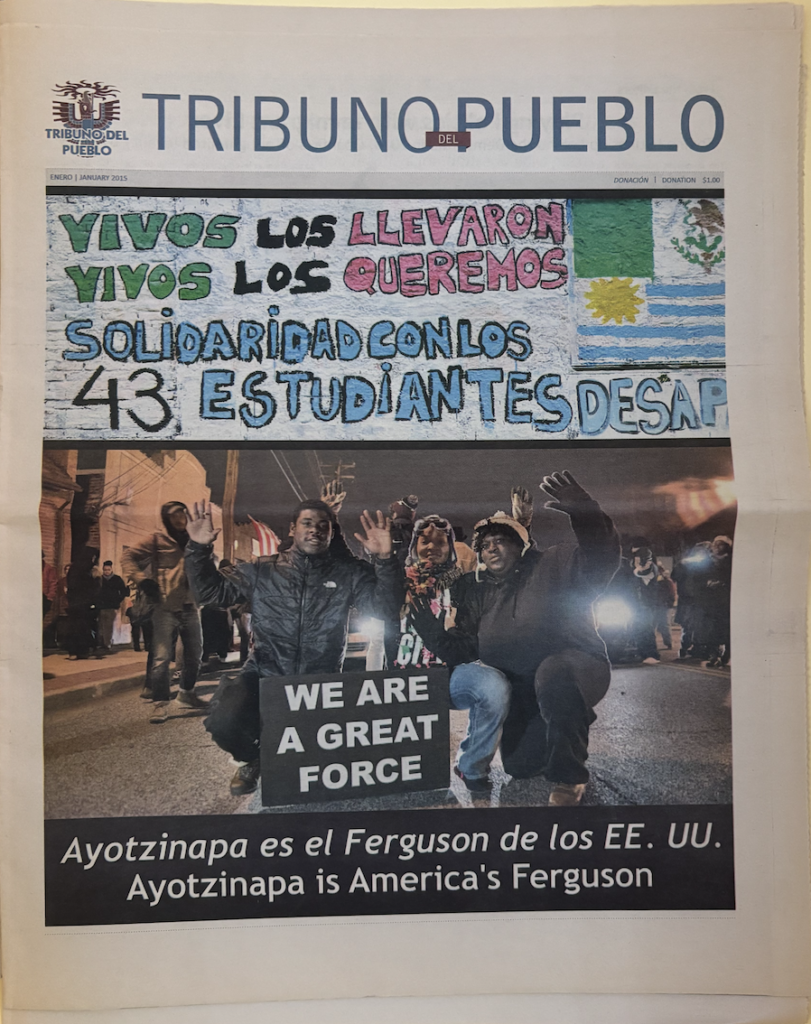
The Tribuno del Pueblo would become inactive in the late 1990s and early 2000s until it was brought back by the board to fight against the anti-immigrant Sensenbrenner bill in 2005. The rising immigrant rights movement energized the paper once again and was distributed to aid the call for citizenship for all. With the rise of the Black Lives Matter movement in the 2010s, the Tribuno connected the stories of violence against Black people in the U.S. to the violence against poor and indigenous people in Mexico. By discussing similarities between two groups, the paper was able to inspire international solidarity across borders.
TODAY
Today the Tribuno del Pueblo has transformed into a digital publication with an intergenerational board based in Chicago, New York City, Los Angeles, San Diego, and Merced, California. The Tribuno del Pueblo and People’s Tribune remain sister publications and were still publishing physical newspapers up until 2020, when the papers were forced to become digital due to the COVID-19 pandemic. While the publications operate independently of each other, they remain connected by a tight knit network and operate with the belief that the publications should work to the benefit of working class people. The League of Revolutionaries for a New America (LRNA), composed of former CLP members, is now working on archiving all things related to the CLP, the People’s Tribune, and Tribuno del Pueblo. You can visit the Tribuno del Pueblo at tribunodelpueblo.org
Funding has been provided by California Humanities and the National Endowment for the Humanities (NEH) as part of the American Rescue Plan Act of 2021.