Cultivating Food, Cultivating Care: Food Sovereignty in Nashville, TN
Mandy Muise
An excerpt from Mandy’s ongoing ethnographic work in Nashville, Tennessee. Perpetually a work in progress.
All photos taken by author. Pseudonyms have been used for people and places.
I sat back on my heels, wiped my hands off on my pants, and peered up at Stacey. I had to squint to see her, the sun bright on this spring morning, as I tried to make sense of what she said.
“Lasagna gardening?” I asked, perhaps more dubiously than an anthropologist should.
She laughed and nodded. Using the toe of her boot, she dug into the dirt that we had just been tilling. Moving the rich, dark soil to the side, she prodded some floppy, wet thing that I couldn’t identify. We had been tilling the earth, fluffing the soil for the seeds that students were soon to plant. All of a sudden, wary of that which I could not see beneath my hands, I stood up and stepped closer to her floppy thing. Up close, it became apparent that the foreign material was cardboard. Unfortunately, identifying the gross mushy material did not give me any revelations, and I was as confused as when I had started.
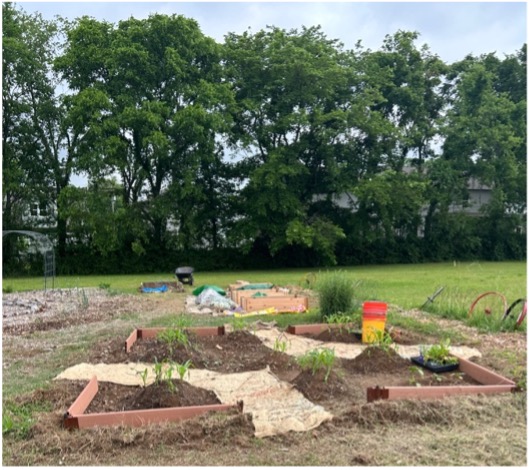
Lasagna gardening, she taught me, refers to a specific way of setting up a garden. With a group of interns the previous summer, she laid the groundwork for what she called a “regenerative” lasagna bed garden. Unlike a regular plot, the lasagna garden lays above ground, yet it differs from a raised bed in the fact that (a) it is not bounded by a physical structure, and (b) it is not filled with soil. Rather than soil, the bed filled with layers of compostable materials, like newspaper, cardboard, mulch, and coffee grounds.
These layers, which lead to the name of “lasagna,” ultimately create a fertile plot that requires no digging, and in theory, no weed pulling and no tilling. Her explanation was extensive and coherent, and as she wrapped up her lasagna discussion, she asked if I had any other questions about the gardening method.
I paused. Glanced at her, and then back down. Internally debated. Hesitating, I finally asked. “So… why are we tilling?”
As it turns out, we weren’t. I just had no idea what tilling meant.
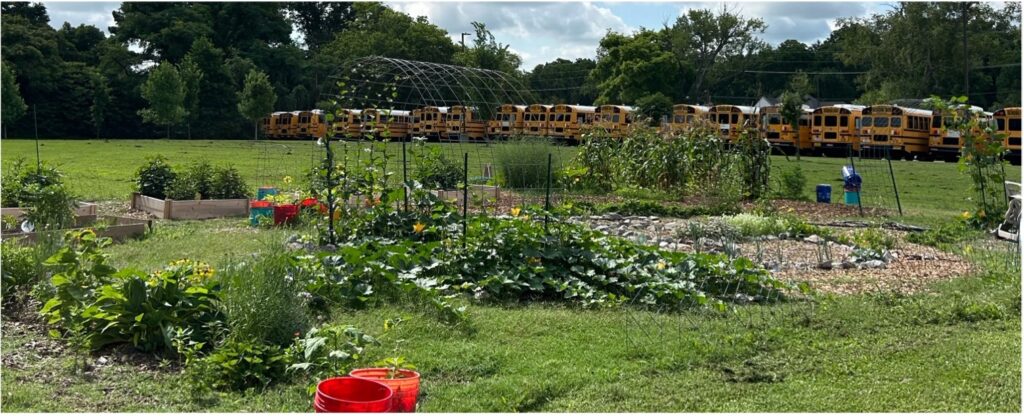
Early March 2025, Southeast Nashville: Bordered by chain-link fences and school trailers, the Wayfair Garden lay barren in early spring. One small blue pop-up canopy provided shade, as the newly planted fruit trees had not yet grown tall enough to provide any shelter from the sun. A picnic table–– black, metal, coated with thermoplastic–– sat crookedly on uneven ground, awkwardly placed as though it longed to return back to pavement. A few silver trellises and one garden arch marked where the previous year’s plants had grown, as did the sun-bleached mulch and fading paintings on some rocks at the entryway to the garden. The space was relatively silent when I arrived, despite its proximity to the school, with the stillness only broken by the occasional car driving by. The lack of trees meant no birds sang overhead, and it was a cloudless day.
I sat, waiting for Stacey, taking in the quiet.
She arrived in her minivan, popped open her trunk, and my stillness ended. It was time to work.
That afternoon, Stacey and I were cultivating the garden at Wayfair Middle School, a “zoned magnet” middle school in Southeast Nashville that had a hybrid school/community garden. This space was tended by a part-time Cultiva staff member, Stacey, who was one of two resident Cultiva gardeners and one of one gardener that saw to Wayfair. I was following her around on one of the first warm days of March, which, as she iterated and reiterated, was not likely to stay warm, as there would probably be at least one more freeze before April.
Scribbling this down absentmindedly in my notebook,I dutifully asked her every question I could. I was walking a fine line between anthropological inquiry and inadequate gardening knowledge when I learned that I, apparently, did not know what cultivating meant either.
I was on my knees in the dirt while Stacey worked above me with a hoe. We were attempting to cajole the spreading mulch back into place while breaking up the soil (her, Stacey) and artfully replacing it into “clean” lines (me, Mandy) with some topsoil. Her vision was for us to lay out a mediative space, what she referred to as a labyrinth, where students could walk among the plants and enjoy the same stillness that I had encountered–– a necessary break from the fluorescents, the bells, and the cacophony of students in the hallway. As we worked, we chatted about her time at Wayfair, about her gardening experience, but, most of all, she answered all of my questions about what we were doing, especially given that we weren’t “tilling.”
Stacey, with all the patience of a saint, explained to me that “cultivating” has two meanings: it was both the overall practice of gardening, as well as a term that referred to working the soil.
Cultivation, in what I’ll term the more grounded action, is a shallow loosening of the soil, intended to remove weeds and optimize air and water intake. I learned that tilling is a form of deep cultivation, attempting to turn the soil in order to bring more nutrient rich soil upwards. I had been under the impression that cultivation was the whole practice of growing, a kind of mysterious, controlled practice of shaping that brought us from seed to fruit. I thought of cultivation in terms of “community cultivation,” “cultivating a sense of identity,” and other abstractions that befit my role as an anthropologist, but perhaps sabotaged my future as a farmer.
I thought of cultivation in terms of “community cultivation,” “cultivating a sense of identity,” and other abstractions that befit my role as an anthropologist, but perhaps sabotaged my future as a farmer. As I poked at the dirt with my shovel, “fluffing it” as instructed, I realized how little I knew about the actual production of food.
Earlier in the day, I had warned Stacey that I was known for my “black thumb” –– what my Nana had called my penchant for killing plants. She, of course, had a voracious green thumb, bringing life even to the darkest corners, where no sunlight could penetrate. Worried that I would ruin her beautiful garden, I let Stacey know that I was prodigal at moving wood chips but would perhaps not be the ideal person to tend to plants.
Waving me off, she said, “gardening may not be easy, but it is simple.” And with that, she lifted the wheelbarrow that we had been retrieving, and we set off to the garden.
Early April 2025, South Nashville: Painted bright yellow to compensate for the part-shade, I built my own raised bed to do my homework. I wanted to learn how to grow, how to cultivate, so that I could actually help out in community gardens instead of needing instruction and, often, correction. The bed is lifted one foot off the ground and is two feet deep. It is lined with an old, grey, fraying plastic tarp, upon which is a layer of old logs to compensate for soil being more expensive than I anticipated. Above these logs are organic raised bed-specific soil–– not sure how the raised beds know what kind of soil it is, but whatever–– and a few frost-resistant plants.
I bought a five-dollar bag of onion bulbs, a two-dollar clearance green-grape plant that seemed decidedly dead and checked out some seeds from Nashville Public Library’s seed exchange program. I began these seeds in trays and eventually moved them into the raised bed. Not a day goes by in which I do not fiddle and meddle with my little plants. The grape is thriving, the onions are going strong, and I’ve only drowned a few young sprouts from sheer enthusiasm. I have yet to find gardening to be simple or easy, but each day that goes by sees dirt under my fingernails and a little more time spent outdoors.
Stacey, for the record, was right; it did freeze over once more before April.
If, as Stacey had claimed, gardening is simple, why do we not all engage more with growing produce? I had conceived of gardening as a skill, a talent that some people possessed but that most of us lacked. How many friends do we all have that can’t keep a houseplant alive? Who do you really know that has more than a small herb garden, often kept inside? Of course, grocery stores mark our lives as radically different from our imaginary of a foraging/hunting-gathering past. Yet the distinct absence of cultivation from the average daily lives of suburban and urban dwellers began to stick out like a sore (green) thumb.
Urban agriculture (UA) is not a new phenomenon; in fact, the ideological split between urban and rural foodways is in itself a byproduct of increasing industrialization. Mendes and colleagues (2008) argue that UA “has become associated with underdevelopment, land squatting, ineffective urban management, and related socioeconomic problems” (emphasis added; Thibert 2012).
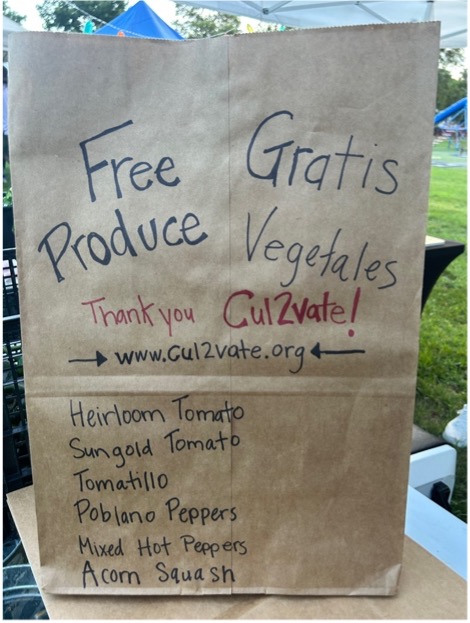
This changing perception of UA is not universal and instead is a trait of the so-called Global North, where UA is seen as a contradiction– urban areas are not where agriculture occurs (Mendes et al. 2008; Mougeot 1994; Thibert 2012; Hanson and Schrader 2014, 193). Instead, urban planning policy in the Global North, particularly in the 20th century, stripped UA of its legitimacy by making food production in urban areas into unacceptable urban activities via zoning laws.
Put otherwise, both agriculture (large-scale plant production) and horticulture (small-scale plant production) have been spatially, and thus socially, excluded from urban zones. This is why I, a North Carolinian who grew up on the fringes of farmland– the boonies, as we called it– knew so little about plant care. Back home, there were three life paths: college (preferred), military (noble), and vocational (unskilled). “Academically Gifted” programs set me up for the former, and yet, standing with Stacey in the garden, my total, embarrassing lack of knowledge about horticulture wasn’t making me feel quite so gifted. Connotatively, gardening to me is a hobby, a skilled practice that stems from an awareness of plants’ needs. Farming, on the other hand, is manual labor. Not unskilled labor necessarily, but in a world where vocational paths are ascribed to the “derelicts,” it was understood and socialized as such. Where I was raised was not exceptional; instead, there is a clear separation of us, the consumers, from them, the producers, within the U.S. Southeast.
It is because of this particular (dis)orientation, one that moved me away from manual and thus unskilled labor, that I felt my detachment from the land laid embarrassingly bare. Working the land is intimate; as we cultivated the soil, we unearthed a particular temporality, one that spoke of the histories of the land. Regenerative gardening, as Stacey called it, confronts “sustainable” as an end goal.
Sustainable, Stacey argued, is only about the present and the near future; regenerative practices, on the other hand, extend far into the past as well as the future and seek to improve the health of the land for future cultivators. This approach is reminiscent, if not appropriative of, the Indigenous concept of the seven generations, through which our decisions are guided by the three generations that came before us, as well as the three that will follow (“Weaving Reparative Futures”).
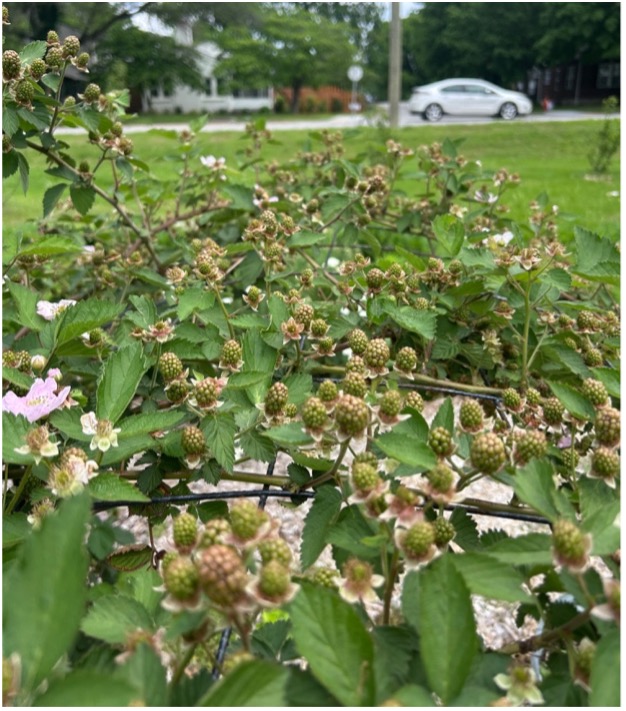
The present-future-past, as Lara (2020) calls it, reminds us that our lives are interwoven with that of others, both in the here-and-now and beyond.
Working alongside cultivators in Nashville, the past, present, and future are simultaneously lived. Past seasons and previous harvests are close to heart and mind as growers plan for their future harvests, and garden education is always deeply intertwined within these spaces. Cultivators largely seem to hold a kind of self-imposed responsibility that drives them to teach others how to grow their own food. Community gardens are becoming public spaces on school grounds, teaching both students and neighbors about the processes of growing. I had always imagined farming and gardening as solo, tranquil work. Yet when I began to speak and work with local cultivators, all I could see was community and connection. Neighborhood growers actively push against the rigid individualism that marks food inaccess as an individual failing, rather than the result of systemic disinvestment in poor communities and communities of color. Within southeast Nashville, to work with urban agriculture is to be an activist, to be an advocate, and to be an educator, thinking about our collective present-future-past.
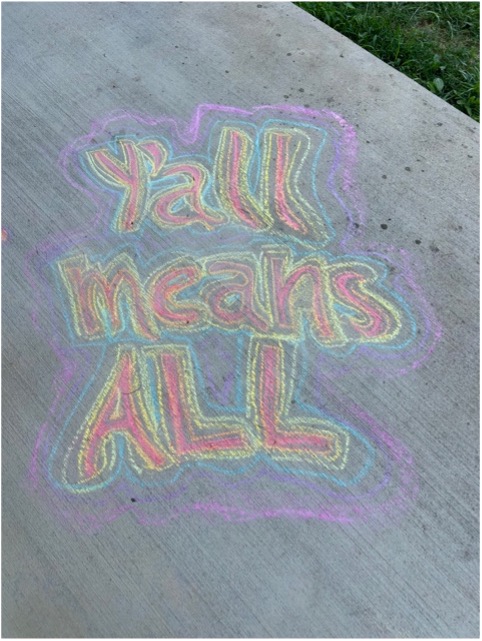
All the time, somewhere in Nashville: Drumming my fingers, I sit, frustrated, in front of my laptop. The shaping and reshaping of contested racial geographies in Nashville, Tennessee is slippery, difficult to comprehend, particularly as ICE continues to kidnap vulnerable community members.
I find it hard to develop my own perspective, my own my place in our shared present-future-past. Under an increasingly authoritarian regime, on the precipice of fascism, is the work of an anthropologist still to critique? To defend? To tell stories, or to conceal them for safety I don’t know; neither do my collaborators. But we keep planting, cultivating food futures, nonetheless.
Funding has been provided by California Humanities and the National Endowment for the Humanities (NEH) as part of the American Rescue Plan Act of 2021.